

Illinois' HB 4456 authorizes utility discount eligibility up to 300% of the poverty level, financed through fixed charges on business accounts as well.

Ireland, Germany, and the Netherlands are rationing grid connections despite growing power supply, forcing site selection toward regions with capacity.

FERC's July 23 conference on PJM governance follows warnings the grid operator is "too big to function," adding new timeline risk for large-load projects.

Europe’s renewable boom is exposing gaps in grid flexibility. Pumped storage is gaining attention as negative prices, heat and curtailment rise.

A new model shows how tiny spacer layers change 2D perovskites. It could help engineers design better LEDs, solar cells and other light-based devices.
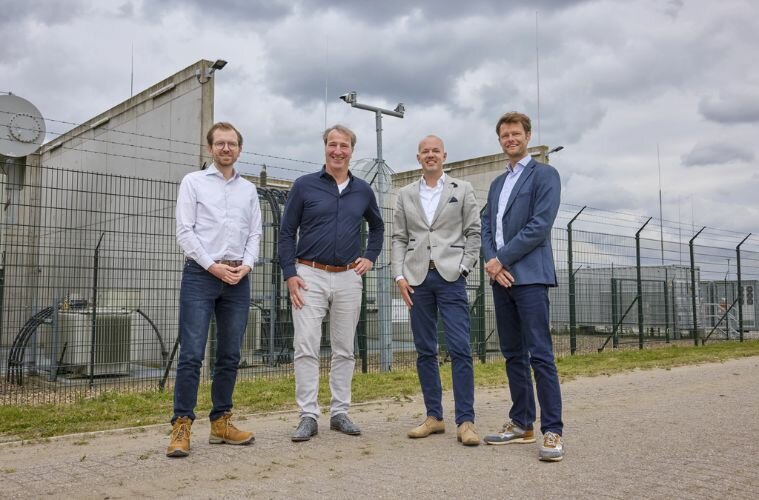
Windpark Zeewolde is pairing Europe's largest onshore wind farm with a new hydrogen-iron flow battery built for 10 to 40 hours of storage, not four.

Treasury now expects to finalize 45Z clean fuel tax credit regulations in November, extending uncertainty for renewable fuel projects and investment planning.

Core Natural Resources subsidiary CONSOL Innovations was selected for a DOE grant to pilot rare earth element recovery from Pennsylvania coal waste.

Power constraints can delay facility openings, increase carrying costs, and force expensive temporary power investments that reshape project economics for CFOs.

Data centers are absorbing grid capacity that manufacturers need for expansion, forcing executives to treat power access as a site selection variable.

Volvo is putting greener materials inside its newest truck cabs. The move brings recycled plastics, fibers and certified wood into VNL and VNR models.

PJM has issued multiple grid reliability alerts as extreme heat pushes electricity demand toward a potential summer record across the Mid-Atlantic.

With median interconnection timelines approaching five years, facilities teams are redesigning project sequencing around a queue that most enterprise plans never accounted for.

CFOs entering Q3 face a triage question: which infrastructure-dependent projects can actually execute on their original timelines, and what changes next.

Infrastructure constraints on power, water and permits are structural, not cyclical. Executives still planning around their resolution are planning for an environment that doesn't exist.

Operators cannot control power demand growth, infrastructure upgrade timelines, permitting contest rates or capital selectivity. What they can control is how early those realities enter their planning

Smart meters and distributed solar are reaching clinics, factories, and households faster than utilities and regulators can align on cyber readiness. Drawing on World Bank sector assessment practice, Lior Tabansky argues coordination has to come before the next rollout wave — not after.

Honda and QuantumScape are deepening solid-state battery research. The work could shape future EV batteries, but scale remains the real test.

For years, organizations optimized for efficiency. In today's operating environment, excess capacity is increasingly becoming a strategic asset organizations can't quickly replicate.

Rock Tech’s Victory option adds lithium upside in Northwestern Ontario. The deal supports its push to link exploration with future conversion capacity.