

In agriculture, materials, transport, and heavy manufacturing, absolute emissions haven't fallen at the required pace. The gap isn't about ambition — it's about structural constraints

EPA approves carbon storage permits in Kansas and Illinois, advancing CO₂ sequestration projects with long-term monitoring requirements.

BNSF's new five-year agreement with TCU covers 746 intermodal workers at four critical hubs, offering a stability signal for supply chain operators tracking rail risk.

New research finds lead in some children’s clothing fabrics. The findings raise fresh concerns for fast fashion supply chains and product safety.

New reporting rules are bringing consistency to tire sustainability data. The shift could help buyers better compare environmental impact.

The USTR has initiated Section 301 investigations into 60 economies — 99% of U.S. import volume — for failing to ban goods produced with forced labor.

Electric vehicles are being tested as flexible grid resources. New pilots show how EVs can supply backup power and help manage peak demand.

Ballard will supply 500 fuel cell engines to New Flyer for hydrogen buses starting in 2026. The agreement signals growing transit demand for zero-emission alternatives to diesel.

AB Energy has opened a new headquarters in The Woodlands, Texas. The move supports growing demand for on-site power and data center energy.

FedEx is testing reusable shipping boxes built for B2B logistics. The pilot aims to cut packaging waste while lowering costs in closed-loop supply chains.

Zero-emission bus adoption is expanding beyond early coastal markets. New data shows transit agencies nationwide increasing electric and hydrogen bus deployments.

Underwriters are using real-time data, asset age, and climate models to reprice freight infrastructure risk. Most operators aren't managing to the new standard.

Strikes on Gulf ports and the Strait of Hormuz are throttling oil, LNG, and freight movement. Here's what operations and procurement leaders need to know now.
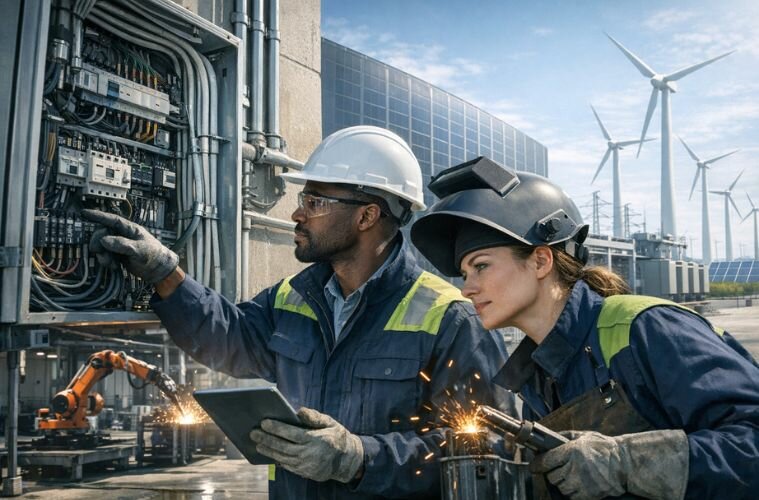
Trump's reshoring push, AI disruption, and a 500,000-worker skilled trades gap are converging — and infrastructure decarbonization is caught in the middle.

New refrigerant rules are live, HFC costs are rising, and cold chain emissions are absent from most decarbonization roadmaps.

SNE Research projects the global fuel cell electric vehicle market will grow from 16,000 units in 2025 to 3.03 million by 2040, led by commercial trucks and buses.

The mandate is real. The power to meet it isn’t — not yet, and not on the same schedule.

Aptera has produced its first vehicle on a validation assembly line. The milestone signals a shift from prototype builds to structured manufacturing.

Here's the part of the decarbonization story that doesn't get enough attention: many companies have already approved the investment — and it still isn't moving.

Stranded asset risk used to be a slow-moving, long-horizon concern — something to manage over decades as the energy transition played out.