
Most people who think about coal plant waste streams are thinking about what to do with fly ash, the lighter material captured from flue gases. Bottom ash, the heavier residue that sinks to the bottom of the boiler during combustion, gets less attention. It also gets a lot of water. Most plants move it out of the boiler using wet slurry systems that are reliable and widely deployed and that require significant ongoing water consumption and produce substantial wastewater volumes that have to be managed under coal combustion residuals regulations. The University of Wyoming's new research project, backed by a $500,000 total award from the U.S. Department of Energy (DOE) through its Hydrocarbon and Geothermal Energy Office, with $400,000 from DOE and $100,000 in matching funds, is asking whether thermal drying could do that job better and what else might become possible once the water is out of the ash.
What Thermal Bottom Ash Drying Actually Does and Why DOE Is Funding It
The approach is fairly direct: rather than using water to move bottom ash as a slurry, thermal drying converts it into a dewatered solids stream. The water it recovers becomes a condensate that can be reused within the plant, including potentially for carbon capture, utilization, and storage (CCUS) systems, or managed with significantly reduced treatment requirements. Drier ash also handles better, stores more easily, and is more amenable to downstream processing. That last point is where the critical minerals angle comes in.
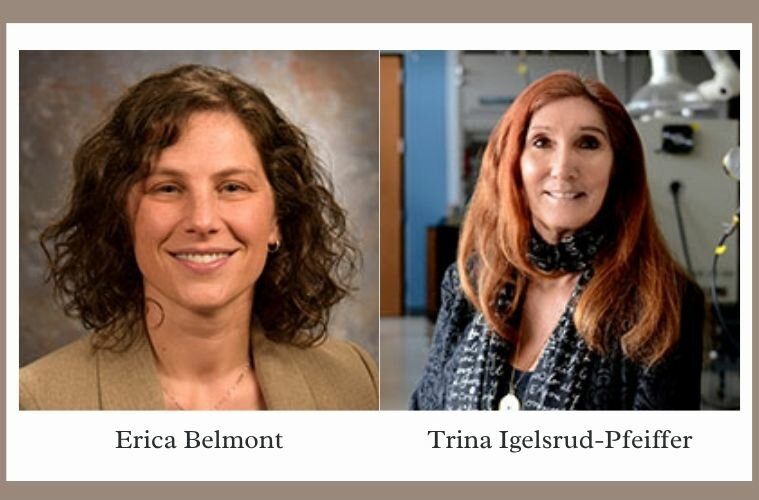
Coal ash contains trace concentrations of rare earth elements and other materials on the federal critical minerals list, including vanadium, which has recognized potential in Wyoming's geology. Recovering those materials economically has proven consistently difficult, in part because wet ash is harder to process. The Wyoming team, co-led by mechanical engineering professor Erica Belmont and Trina Igelsrud-Pfeiffer, director of the university's Center for Carbon Capture and Conversion (CCCC), believes removing moisture earlier in the handling chain could make mineral recovery more practical at scale. The CCCC has been building out this broader research platform for several years, including a coal-to-products field demonstration plant near Gillette capable of processing 11 tons per day of coal and testing extraction of rare earth elements from multiple coal waste streams.
How the Wyoming Project Fits the Broader DOE Coal Infrastructure Strategy
The Wyoming project was one of nine selected under DOE funding opportunity DE-FOA-0003606, which targets pre-Front-End Engineering Design studies for existing coal and natural gas infrastructure. The other selections include a Tennessee company testing waste heat-powered evaporation for zero liquid discharge of flue gas desulfurization wastewater, an East Kentucky cooperative evaluating natural gas co-firing impacts on air pollution control systems, and an Indiana plant exploring natural gas co-firing at a facility set for retrofit. All are early-stage feasibility studies, not construction projects, and the Wyoming study is no different. What DOE is buying at this stage is a rigorous technical and economic assessment of whether the technology works, what it costs, and how it interacts with CCUS readiness.
That framing matters for how to read the investment. The department has been consistent in its view that existing coal facilities are underutilized assets, not just aging generation units waiting for retirement. Water reduction, mineral recovery, and CCUS compatibility are three of the clearest ways to extract additional value from infrastructure that already exists, already has grid interconnection, and already has a workforce. Whether thermal bottom ash drying can deliver on all three at commercially relevant economics is what the University of Wyoming team is being paid to find out.


