

A peer-reviewed study in The Cryosphere is the first to directly attribute a major Antarctic glacier's retreat to human-driven warming, with effects projected to continue for centuries.

Senior energy officials from Qatar, the U.S., Nigeria, and Algeria are urging the EU to clarify methane rules before 2027 import requirements begin, warning of rising supply disruption risk.

Tariff volatility, critical mineral concentration and supplier concentration have shifted the sources of procurement leverage heading into Q3 2026.

Infrastructure constraints on power, water and permits are structural, not cyclical. Executives still planning around their resolution are planning for an environment that doesn't exist.

The D.C. Circuit unanimously upheld the EPA's 2024 PM2.5 soot standard on June 26, rejecting the Trump administration's bid to abandon the rule. EPA said it is reviewing the decision.

MediSun and Yanrun are launching a Singapore JV for brine recovery. The move targets industrial water reuse markets facing tighter rules.

UPS is investing $48 million in temperature-controlled freight facilities while expanding AI-powered logistics to support growing pharmaceutical demand.

Speakers at London Climate Action Week said cities, businesses, and regional coalitions are increasingly driving climate action ahead of COP31.
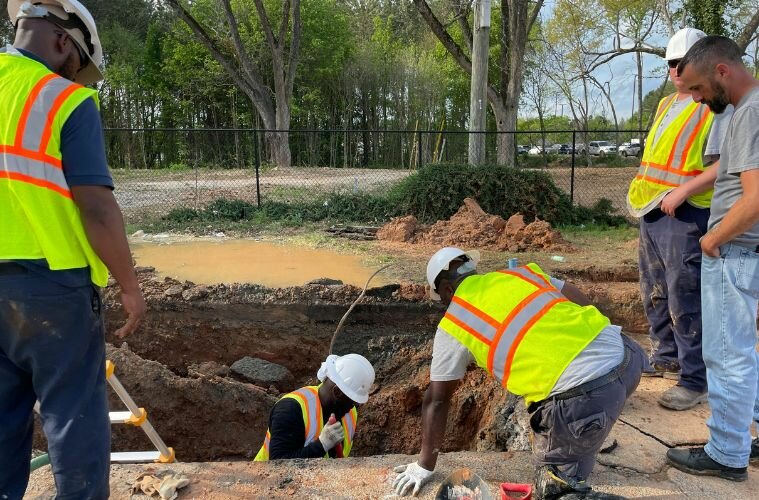
Operators cannot control power demand growth, infrastructure upgrade timelines, permitting contest rates or capital selectivity. What they can control is how early those realities enter their planning

Grid queues, water access, permitting risk and capital timing are converging on the same projects. That is changing how executives plan for Q3.

Honda and QuantumScape are deepening solid-state battery research. The work could shape future EV batteries, but scale remains the real test.

World Athletics' 2026 midpoint review shows what happens when sustainability stops being a pledge and becomes a contractual deliverable embedded in event hosting requirements.

Colorado CDPHE is accepting applications for its Environmental Justice Grant Program, funding up to 10 projects in pollution-impacted communities.

Many organizations entered 2026 expecting normalization. Q2 suggests the second half will be defined by adaptation rather than recovery.

For years, organizations optimized for efficiency. In today's operating environment, excess capacity is increasingly becoming a strategic asset organizations can't quickly replicate.

Rock Tech’s Victory option adds lithium upside in Northwestern Ontario. The deal supports its push to link exploration with future conversion capacity.

A new University of Wyoming project highlights how DOE increasingly views coal plants as platforms for critical minerals, water savings, and carbon capture.

Illinois HB1700 expands state authority over renewable energy siting disputes, signaling a broader shift toward accelerating project development.

For years, uncertainty justified delay. Increasingly, uncertainty itself is becoming the cost organizations can no longer afford to absorb.

The projects moving forward in the second half of 2026 are increasingly defined by infrastructure readiness, permitting certainty, and execution feasibility rather than projected returns alone.