
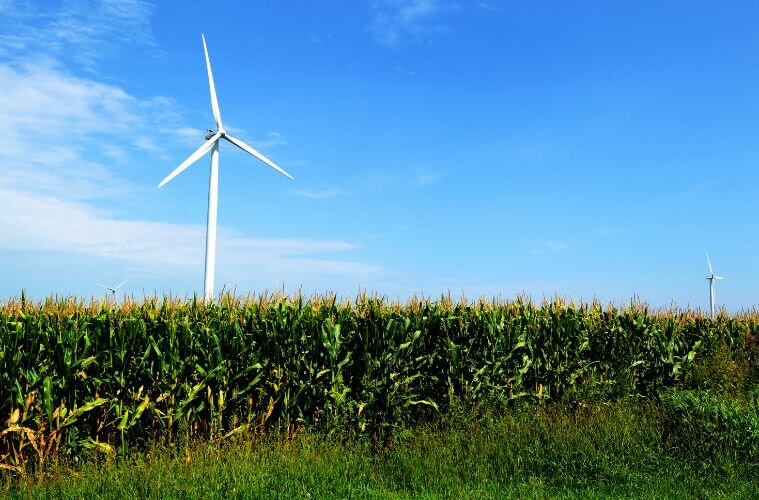
Local opposition has derailed or delayed more clean energy projects in Illinois than technology or financing ever has. Zoning hearings run long, ordinances get revised, appeals stack up, and projects that survive all of that still face interconnection queues on the other side. Illinois has been trying to fix this problem in stages. In 2023, the state established statewide siting standards for commercial wind and solar, barring counties from imposing conditions more restrictive than those standards. In January 2026, Governor J.B. Pritzker signed the Clean and Reliable Grid Affordability Act (CRGA), which strengthened those standards, added energy storage to the framework, and gave the Illinois Commerce Commission (ICC) new authority to resolve siting disputes through an administrative appeal process. House Bill 1700 (HB1700), passed by both chambers and sent to the governor on June 23, extends that authority further.
What HB1700 Adds to the ICC's Siting Dispute Authority
Under HB1700, the ICC gains expanded power to issue a siting certificate for a qualified energy facility when it determines that a project complies with applicable state siting laws and a local government has denied approval, failed to act within required timelines, or failed to adopt ordinances consistent with state requirements. That last condition is the new edge. Prior law focused on disputes and appeals; HB1700 lets the commission step in when a local government simply hasn't gotten its ordinances in line with state standards, not just when it has actively rejected a project.
The bill passed the House 70-37, with Republicans splitting largely against the siting provisions. Critics argued the legislation usurps local control over land-use decisions. Supporters countered that counties still have appeal rights before the ICC, and that the alternative is a system where state energy goals collide with local permitting indefinitely. Illinois manufacturers raised a separate concern: the state already has some of the highest industrial electricity rates in the Midwest, and rate increases tied to new storage mandates in CRGA could widen that gap before the savings materialize. The Illinois Power Agency (IPA) analysis of the broader CRGA package found that customer bill increases from new storage programs would be offset by 2029, though that timeline depends on procurement and construction going smoothly.
Why Project Developers Are Watching the Siting Provisions More Than the Incentives
HB1700 also adjusts distributed storage rebate thresholds, modifies Illinois Solar for All funding mechanisms through May 2028, and changes geothermal prevailing wage requirements. Those provisions matter to specific stakeholders. But developers evaluating large project pipelines in Illinois are more focused on the siting changes, and for a straightforward reason: permitting uncertainty is where capital decisions actually get made. A project that clears interconnection, secures financing, and lines up equipment procurement can still sit idle for years in local zoning proceedings. The ICC backstop reduces, though does not eliminate, that exposure.
Illinois is not alone in moving this direction. Across the country, states pursuing aggressive clean energy targets have run into the same tension: state policy sets the destination, and local permitting controls whether anyone gets there. Some states have tried voluntary streamlining; others, like Illinois, have moved toward state preemption with county appeal rights preserved. Neither approach has fully resolved the conflict, because the underlying disagreement, about who bears the land-use costs of energy infrastructure and who captures the benefits, doesn't have a clean legislative answer. What HB1700 does is shift the default. In Illinois, a compliant project now has a clearer path forward even when a county doesn't want it.


