

New research reveals how microplastics are altering water chemistry—reshaping environmental risk management stakeholders.

Grid bottlenecks, transformer shortages, and supply chain delays are forcing boards to reassess capital timing, operational resilience, and enterprise risk.

Regulatory volatility and market repricing are forcing executives to rethink risk exposure, capital timing, and operational resilience heading into 2026.

The CDC will hold a public January 28, 2026 meeting of its radiation worker health subcommittee to review dose reconstruction procedures and related documents.

New testing across major brands suggests recycled polyester sheds more microfibres and “recycled” claims may be inconsistent—raising ESG and compliance risk.

The Supreme Court will hear a case testing whether federal agencies exceeded their authority, a ruling that could affect future regulatory and ESG enforcement.

Ohio’s new gas rate law allows utilities to negotiate large-load contracts while isolating infrastructure costs—reshaping risk for executives, finance, and energy buyers.

Green-certified buildings aren’t living up to the promise. As performance gaps widen, investors are demanding proof of real energy and cost savings.

Minnesota’s new PFAS rule requires manufacturers to report intentionally added PFAS by July 1, 2026, with detailed product data, fees, and annual updates.

A new SEI–CEAP report warns that omitting animal health and welfare from the SDGs is slowing progress on public health, climate, and equity.

Toilet paper is splitting into two camps: sustainable and status quo. New NRDC data shows legacy brands lag as bamboo and recycled options gain ground.

A federal court has vacated the nationwide pause on wind permits, finding the Wind Order unlawful and requiring agencies to resume processing applications.
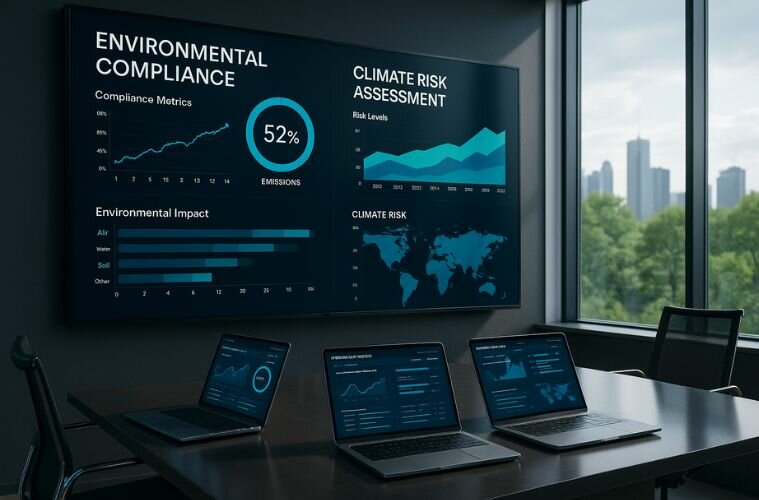
Digital compliance systems are emerging as resilience infrastructure as U.S. regulatory shifts and climate risks push companies toward real-time environmental oversight.

A federal court vacated Detroit’s ozone redesignation, restoring Moderate controls and raising new compliance considerations for 2026 infrastructure projects.

Indiana’s new SB 54 would restrict local solar siting by requiring rezoning before overlay districts can host commercial solar projects, reshaping project development.

Released in November 2025, new maritime SMR research shows global nuclear and shipping agencies must build unified safety, liability, and port-access rules.

AI capabilities accelerated across EHS platforms in 2025, shifting the market toward governance, transparency, and trusted automation for regulated workflows.

Companies are rethinking infrastructure modernization for 2026 as PJM faces rising demand and volatility, prompting new strategies for reliability and flexibility planning.

BD and ChemoGLO expand hazardous drug testing with dual-method monitoring that strengthens compliance, worker safety, and environmental contamination control.

Methanol is ready to power low-emission shipping, but high costs and tight supply are slowing its rise. Regulatory clarity will be key to scaling adoption.