

Tier 1 buyers are discovering that subcontracted compliance failures move up the liability chain faster than most procurement frameworks were designed to handle.

AI data centers need power faster than grids can expand. That gap is raising new reliability, pricing and project risks for businesses.

PIMCO's 2025 Sustainable Investing Report covers $645B in sustainability strategies, 1,300-plus corporate engagements, and expanded ESG and climate frameworks across fixed income.

A UN carbon market decision this week reopens the most scandal-prone credit category in market history. Sustainability teams holding older credits need to review them before auditors do.

DJI Agriculture's 2025 industry report tallies 51 million tons of cumulative CO2 reductions and 410 million tons of water saved from over 600,000 deployed drones globally.

Worker heat exposure is moving into mandatory disclosure in Australia, the EU, and several U.S. states at the same time. Most ESG reports have not kept pace. Here is what is changing.

C40 Cities and UN-Habitat's Urban Planning Accelerator launched at the World Urban Forum with 33 cities committing to compact, climate-responsive development by 2035.

As heat seasons grow longer and grid stress events hit more frequently, the transition points that were always the weakest links in temperature-sensitive logistics are failing at higher rates.
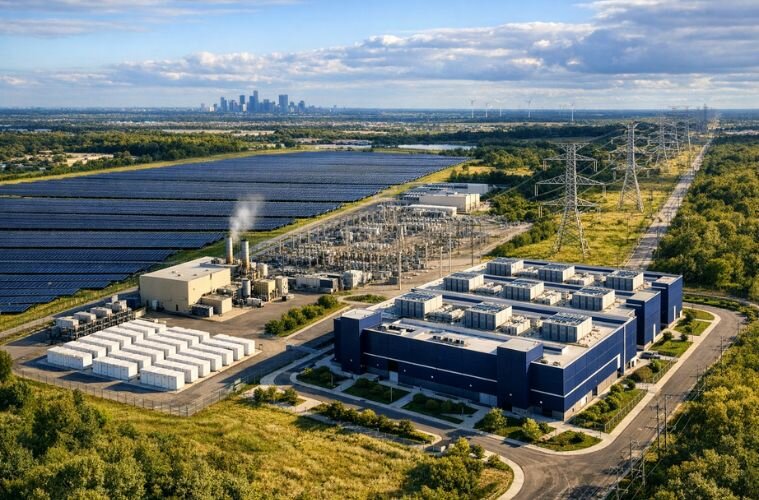
The leading edge of corporate energy procurement in 2026 is not a sustainability conversation. It is an infrastructure conversation.

Policy divergence between the U.S., Europe, and Asia Pacific is forcing multinationals to manage energy procurement as a collection of regional decisions rather than a coherent global strategy.

Antarctic ice shelves act like doorstops, slowing land ice from reaching the sea. New modeling shows hidden channels underneath may speed up melt.

Colorado SB 102, which would have required data centers to pay full grid costs and meet emissions targets, was voted down unanimously May 11. Other states are hitting the same wall in 2026.

A Rice University PNAS study links El Nino and Indian Ocean Dipole climate patterns to armed conflict onset in drought-exposed regions, with implications for supply chain and operational risk planning.

Radisson is taking net zero from target to test case. Its latest report shows how hotel-level changes are shaping emissions, workforce and supply chain goals.

Renewable energy supplier instability is creating counterparty risk that corporate finance and C-suite teams have not priced into existing supply agreements.

Project Jupiter is moving to a fuel cell microgrid. The shift highlights how AI data centers are rethinking power, water and local impact.

The cost of not investing in climate health systems is quantifiable, and the financial return on investing in them is exceptionally high.

FYUL is tightening supply chain visibility with TrusTrace. The move comes as brands face rising pressure for product-level proof.

Scope 3 emissions in supplier networks are outpacing facility-level efficiency gains. New data and GHG Protocol revisions are raising the stakes for sustainability leaders in 2026.

The voluntary carbon market has a credibility problem that is no longer contained to specialized environmental circles.