
Every year, people glance at the list, note who climbed or dropped, and move on. This year, that would be a mistake.
Yes, Massachusetts is number one again. Yes, Illinois is holding steady at number two. But if you stop there, you miss what the 2025 data is actually telling us about where green building standards are headed — and who's now doing the pushing.
For years, corporate offices and university campuses were the reliable engines behind LEED growth. They still matter. But in 2025, the sectors driving real momentum are life sciences campuses, data centers, and advanced manufacturing facilities. That's a notable departure from the pattern we've seen for most of the past decade.
In Virginia and California — both in the top 10 — data center expansion is a big part of why those states are where they are. Owners of energy-intensive facilities are leaning into LEED not because it looks good on a brochure, but because energy efficiency and grid readiness are now operational priorities they can't ignore. When your facility draws that much power, performance certification stops being optional and starts being practical.
Colorado's jump is also hard to overlook. Six spots in a single year, landing at number three, suggests something more than incremental progress. Georgia cracked the top 10 for the first time since 2023, which signals that green building adoption is continuing to spread into markets that weren't historically associated with it.
One of the quieter but more telling trends in this year's data is the rise of recertifications. In New York, Illinois, and Georgia, owners are running existing buildings back through the LEED process — not to earn a plaque, but to validate performance for tenants and show concrete progress on sustainability commitments that are now embedded in corporate reporting.
This matters because it means LEED is no longer just a new construction story. It's becoming part of how building owners manage and communicate long-term performance. That's a different kind of adoption — slower to build, but probably more durable.
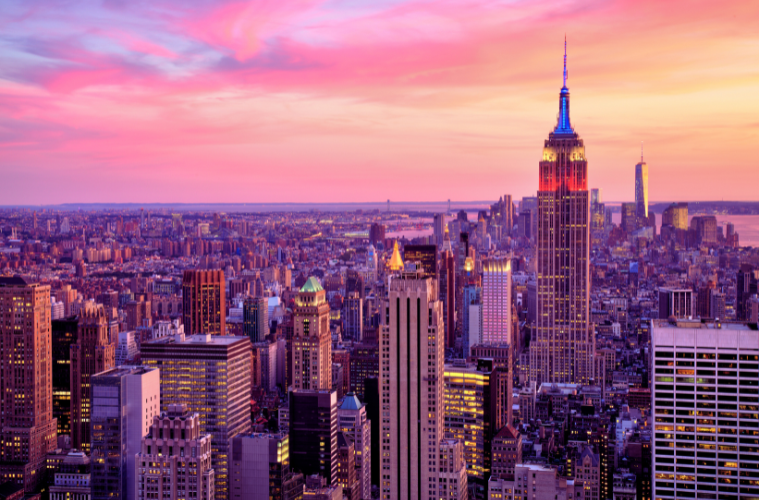
The Empire State Building's achievement this year puts a point on it. The building earned LEED v5 Platinum certification, the first in New York to do so. LEED v5 sets a higher bar: deeper carbon reductions, grid-interactive efficiency, stronger standards for indoor environmental quality. The Empire State Building isn't a shiny new development — it's a 95-year-old icon that just demonstrated what retrofitting for the future actually looks like in practice. That sends a signal to every owner sitting on an aging asset wondering whether high-performance standards are realistic for them.
It's also worth noting that large-scale public venues — the Las Vegas Convention Center, Chicago's Soldier Field — are now part of the LEED-certified portfolio. These aren't quiet corporate campuses. They're high-traffic, high-visibility facilities, and their certification reflects how broadly the expectation of performance is spreading.
The District of Columbia, while not formally ranked in the state list, continues to dwarf everyone at 49.20 gross square feet per capita. That's not even close to anyone else on the list.
The 2025 rankings don't just tell you which states are doing well. They tell you that the definition of a "green building market" has widened considerably. Data centers, labs, manufacturing floors, arenas — these are now LEED territory. The gap between buildings that have invested in performance and those that haven't is becoming more visible to tenants, investors, and the people responsible for reporting.
For anyone managing a portfolio or making capital decisions about the built environment, the question isn't whether these standards matter. It's whether your buildings are keeping pace with a market that's moving faster than it looks.


