
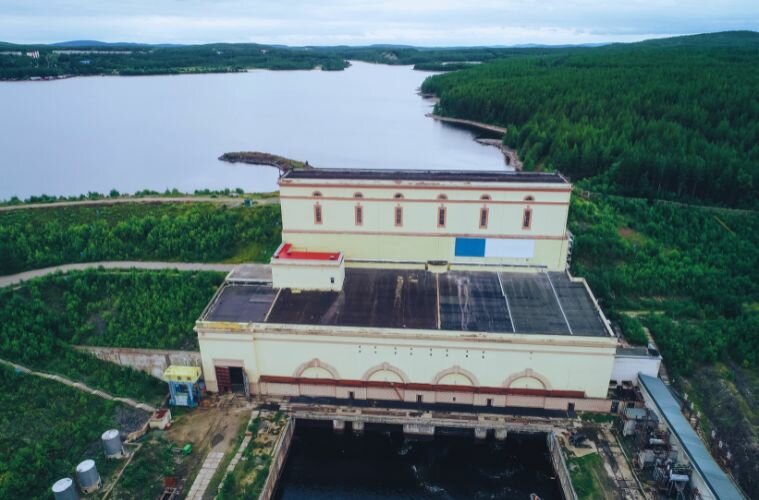
During the session, operators shared examples of bypass lines carrying anywhere from 10 to more than 100 cubic feet per second (CFS), sometimes under hundreds or even thousands of feet of head. These flows are essential for meeting environmental releases, managing pressure, or feeding new fish-passage systems—yet the associated hydraulic energy is typically dissipated through valves. Several case studies presented during the session showed how these same bypasses could support supplemental generation without altering required discharge volumes.
National data reinforces the scale of the opportunity. Oak Ridge National Laboratory reports that the U.S. has 92,000 dams, but only about 2,500 generate electricity, leaving a large portion of existing water infrastructure underutilized. Federal assessments also estimate that 1.4 GW of conduit hydropower—generation inside municipal, industrial, and agricultural pipelines—could be added using existing conveyance systems alone.
The engineering considerations are relatively straightforward: stable or regulated flows, sufficient pressure to support a turbine, and a bypass or pipeline where fish do not need to pass. Participants discussed typical ranges of roughly 10–250 CFS and 20 feet to several hundred feet of head, as well as the importance of variable-flow operation. Because most hydropower plants already maintain grid interconnections, some supplemental systems may be able to connect behind existing interconnection points if total output stays within licensed capacity.
Outside the hydropower sector, similar approaches are already in use. Cities such as Aurora, Colorado, and water utilities in the San Francisco Bay Area now recover energy at pressure-reducing stations, generating electricity while maintaining downstream pressure conditions. Industrial sites, including pulp and paper mills and thermal plants—are evaluating their cooling-water pipelines for the same reason.
As hydropower facilities prepare for relicensing, fish-passage construction, or drought-driven operational changes, energy recovery inside existing pipelines offers a low-impact way to stabilize generation and extend the value of infrastructure that is already in place. As modernization efforts accelerate, bypass flows and pressure-regulated conduits are no longer being viewed strictly as compliance features, they are becoming part of the generation conversation.


