
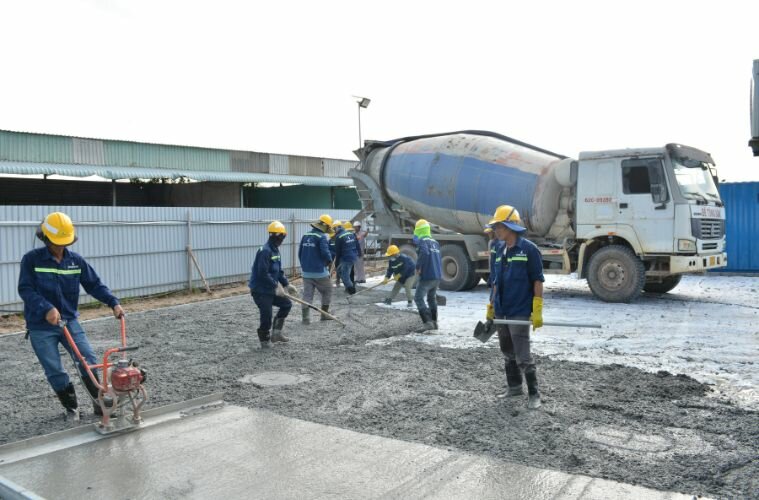
As skilled trades shortages narrow the contractor pool, procurement teams face a workforce constraint they didn't create and can't negotiate their way out of.

CFOs entering Q3 face a triage question: which infrastructure-dependent projects can actually execute on their original timelines, and what changes next.

The UK announced a $63.5 million critical minerals investment, funding rare earth magnet manufacturing, recycling projects, and a new industry demand aggregation platform.

Climate policy uncertainty is affecting firm-level investment, employment, and R&D as a material financial risk. Companies managing it best are treating it as a capital strategy problem.

Twenty-one percent of supply chain leaders still operate without real-time visibility into disruptions affecting their suppliers

Investors call corporate water risk disclosure unfit for decision-making yet keep relying on it. As regulatory pressure builds and water stress accelerates, that tolerance is ending.
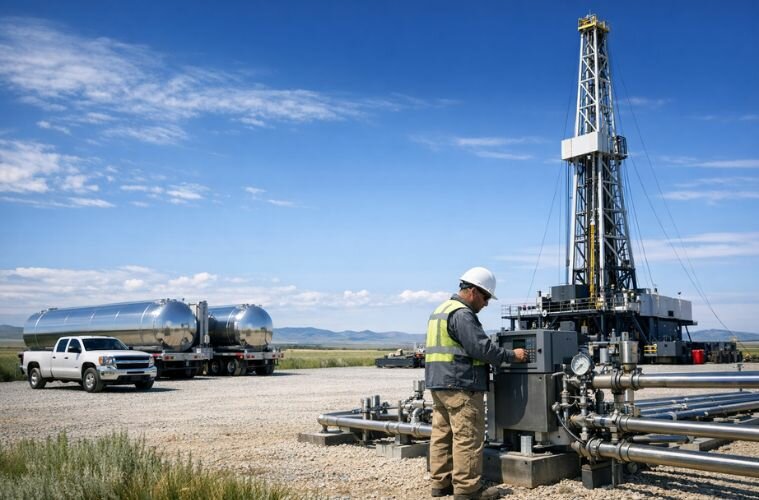
REV Exploration closes a $4M raise with Eric Sprott to advance its Aden Dome helium and natural hydrogen prospect as Middle East supply disruptions accelerate the North American sourcing race.

Idaho's April trade mission to Japan and Micron Technology's accelerated Boise fab timeline are positioning the state inside the semiconductor and AI supply chain buildout reshaping U.S. industrial geography.

House FY2027 energy and water bill advances at $58.5B, cutting grid and clean energy programs sharply while boosting nuclear defense and water infrastructure.

A convergence of policy changes, carbon pricing, corporate decarbonization pressure, and rapid growth in corporate PPAs is reshaping how companies operating in Japan evaluate electricity procurement.

Policy divergence between the U.S., Europe, and Asia Pacific is forcing multinationals to manage energy procurement as a collection of regional decisions rather than a coherent global strategy.

Procurement teams that accepted broad pass-through language in their energy agreements because it looked like standard contract boilerplate are now receiving invoices that reflect tariff costs they did not model, did not cap, and may have limited ability to dispute.

AI infrastructure build-out is running into a constraint capital can't solve: the grid can't deliver megawatts as fast as investment wants to move.

Water is no longer an operational input. It is a constraint on capital deployment. And unlike energy, it cannot be substituted, hedged, or easily relocated once a facility is built.

The USTR has initiated Section 301 investigations into 60 economies — 99% of U.S. import volume — for failing to ban goods produced with forced labor.

Forced labor enforcement just expanded to 60 countries. ESG disclosures are hardening into liability. Energy assumptions are dated. The window to act is narrowing.

If you watched Elon Musk take the stage last week and describe building a terawatt-scale chip manufacturing facility, you probably had one of two reactions: jaw on the floor, or quiet concern...

The global water and wastewater treatment market is expanding at 7% annually. Technology — membranes, AI, IoT — is driving the growth.

From CDP Water scoring to Alliance for Water Stewardship certification, buyer expectations on supplier water data have become significantly more specific.
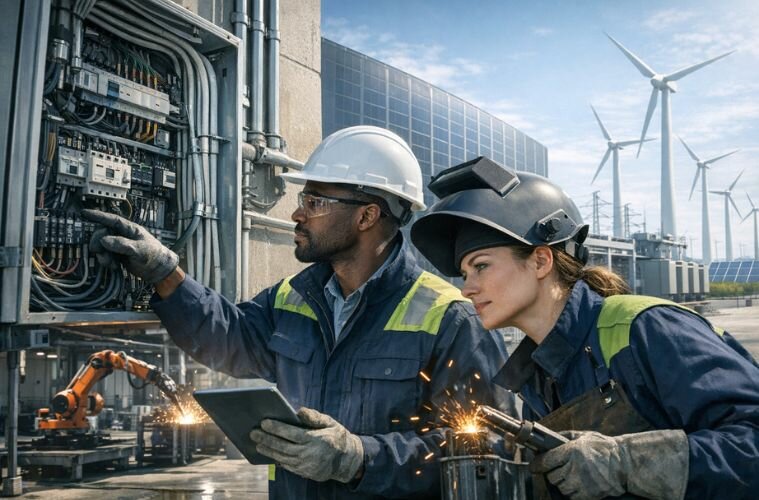
Trump's reshoring push, AI disruption, and a 500,000-worker skilled trades gap are converging — and infrastructure decarbonization is caught in the middle.