

Duke Energy applied for DOE loans on May 11 to lower financing costs on its $103 billion five-year capital plan serving six states with fast-growing energy demand.

What do industrial operations leaders heading into contract renewals in 2026 need to know?

Policy divergence between the U.S., Europe, and Asia Pacific is forcing multinationals to manage energy procurement as a collection of regional decisions rather than a coherent global strategy.

The Hormuz closure did not create new risk in corporate energy portfolios. It made visible the risk that was already priced at zero.

Interconnection delays are creating PPA delivery shortfalls that finance teams did not model. The cost of sourcing replacement power is showing up as unexplained energy budget variance in 2026.

Procurement teams that accepted broad pass-through language in their energy agreements because it looked like standard contract boilerplate are now receiving invoices that reflect tariff costs they did not model, did not cap, and may have limited ability to dispute.

Renewable energy supplier instability is creating counterparty risk that corporate finance and C-suite teams have not priced into existing supply agreements.

Energy contracts signed in 2021 and 2022 contain clauses procurement and finance teams are now being forced to act on. What to audit before Q3 capital planning closes.

The voluntary carbon market has a credibility problem that is no longer contained to specialized environmental circles.

The federal BFPP defense protects brownfields buyers from CERCLA liability, but state programs differ significantly. What EHS and legal teams need to understand before acquisition.
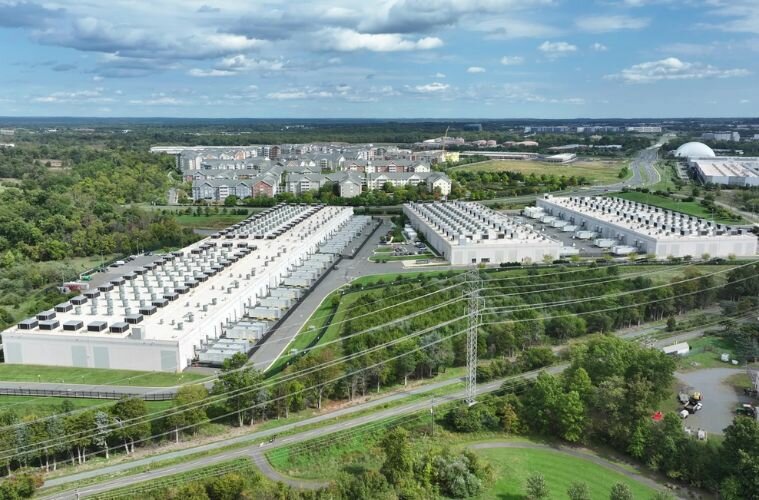
The arithmetic of corporate energy efficiency has stopped working for a growing number of technology-intensive companies.

Corporate budgets are forcing a choice between efficiency upgrades and resilience investments. What operations leaders need to understand before Q3 capital planning.

AI infrastructure build-out is running into a constraint capital can't solve: the grid can't deliver megawatts as fast as investment wants to move.

Most organizations have an energy plan. Fewer have a strategy built on current infrastructure realities. The difference will become measurable and expensive over the next 18 months.

Mars signed a virtual PPA for most of the output from a planned wind farm in Lithuania that doesn't exist yet.

Sustainability-linked bonds tied to electrification milestones assume the borrower controls the timeline. Grid access constraints are proving that assumption wrong in a growing number of cases.

Location decisions that once turned on labor and logistics now carry an energy access dimension most companies aren't modeling. The organizations finding out mid-project are paying for it.

Virtual PPAs were built for a grid with room to grow. As congestion spreads and basis risk climbs, procurement teams need a new contracting playbook for current grid conditions.

Grid constraints are moving from operational headaches to financial exposure. CFOs who haven't priced energy access risk into capital plans are already behind.

A new global coalition aims to define sustainability standards for AI data centers as energy and water pressures intensify worldwide.