
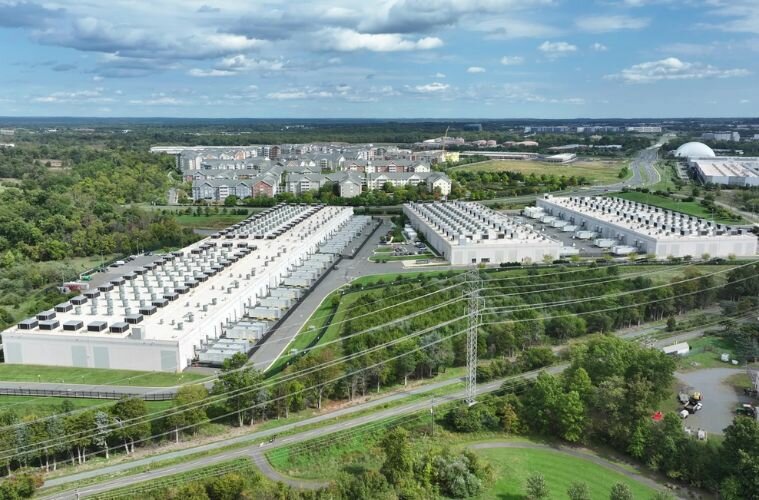
The arithmetic of corporate energy efficiency stopped working for a growing number of technology-intensive organizations sometime in 2024. Facilities teams were still executing efficiency retrofits and delivering on sustainability targets. At the same time, AI workloads, expanded data center capacity, and digital infrastructure investments were adding load at rates that no retrofit program was designed to address.
The result is a gap that is widening, not closing.
What AI Workload Growth Means for Corporate Energy Consumption
The International Energy Agency (IEA) estimated in its 2025 Electricity Report that data centers consumed approximately 415 terawatt-hours globally in 2024, and that number is projected to more than double by 2028 on current trajectories. For individual organizations with significant AI or cloud infrastructure, the numbers are concentrated and immediate.
A generative AI inference workload can consume 10x the energy of a standard search query. Training runs for large language models can consume the equivalent of thousands of average U.S. homes' annual electricity use in a matter of weeks. Companies that are scaling AI capabilities internally are doing so on top of efficiency programs that were designed around a fundamentally different load profile.
Why Efficiency Program Accounting Is Masking the Problem
Most corporate energy efficiency programs measure performance against a baseline established before AI workload expansion began. Energy use intensity calculations that divide total consumption by square footage or production output can still show improvement even as absolute consumption climbs, because the baseline metric is growing.
This creates a reporting dynamic that looks successful on paper while the underlying energy exposure grows. Sustainability teams tracking intensity metrics may be accurately measuring their program's performance while missing a material increase in absolute energy cost and carbon exposure. The IEA and Lawrence Berkeley National Laboratory have both flagged this measurement gap as a growing issue for corporate energy accounting.
How Data Center Expansion Is Affecting Grid Access and Cost
Data center expansion is not only a corporate accounting problem. It is a grid access problem that affects organizations whether or not they operate their own data centers. NERC's 2025 reliability data documents load growth in data center-heavy markets in Northern Virginia, Phoenix, and the Dallas-Fort Worth corridor that is straining regional transmission capacity.
Commercial and industrial customers in those markets are facing longer interconnection timelines for on-site generation projects, rising demand charges, and rate structure changes driven partly by the infrastructure investments utilities are making to serve new data center load. For technology and operations leaders outside the data center sector, the grid congestion generated by regional data center expansion creates rate exposure that efficiency programs alone cannot hedge.
What Technology Leaders Need to Acknowledge About Their Energy Footprint
The accounting conversation that most technology-intensive organizations have not had is the one that separates efficiency program performance from total energy trajectory. Running an efficiency program that reduces building energy intensity by 2% annually while AI infrastructure is adding 15% to 20% more total load is not a neutral outcome. It is a growing gap.
Microsoft, Google, and Amazon have each disclosed in recent sustainability filings that data center growth is outpacing their renewable energy procurement. For smaller organizations scaling AI capabilities without hyperscaler infrastructure budgets, the exposure is proportionally more acute.
What Operations and Technology Leaders Should Be Doing Now
Addressing the AI energy gap requires two things that efficiency programs don't deliver on their own: absolute load management and zero-carbon supply. Load management for AI workloads means optimizing inference scheduling, right-sizing compute for specific tasks, and evaluating whether workloads need to run at peak grid times. These decisions sit at the intersection of IT operations and energy management, and most organizations haven't built the cross-functional process to make them well.
Zero-carbon supply requires procurement action: power purchase agreements, on-site renewables, or energy attribute certificates that match the scale of AI growth. None of those are efficiency investments, and none of them should be deferred while waiting for efficiency programs to close a gap they were not designed to close.


