
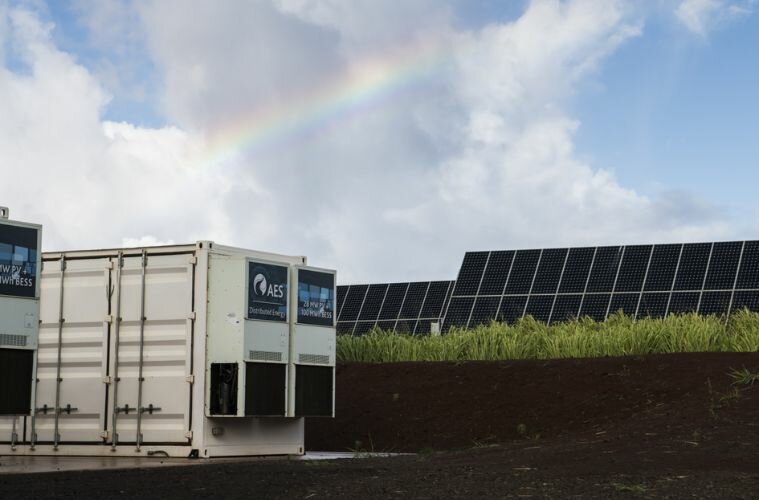
For facilities under grid pressure, on-site generation is no longer primarily a sustainability play. It's the clearest available tool for managing operational risk.

Location decisions that once turned on labor and logistics now carry an energy access dimension most companies aren't modeling. The organizations finding out mid-project are paying for it.

A major convention center doubled solar output without expanding space. Thousands of retired panels were reused, cutting waste and supporting local users.

Experts at CMU Energy Week debated whether DERs are ready to help utilities manage surging electricity demand from data centers, electrification, and reshoring.

Industrial facilities are restructuring shift schedules around grid availability. In high-congestion markets, load flexibility has become a condition of grid access, not just a revenue opportunity.

Virtual PPAs were built for a grid with room to grow. As congestion spreads and basis risk climbs, procurement teams need a new contracting playbook for current grid conditions.

NYC is investing in EV workforce training to keep charging networks running. A Brooklyn program connects hands-on skills with growing job demand.

EPRI and EV Charging POD experts reveal why interconnection timelines, on-site generation, and data gaps are slowing electric vehicle infrastructure.

Grid constraints are moving from operational headaches to financial exposure. CFOs who haven't priced energy access risk into capital plans are already behind.

Utility capacity warnings are no longer background noise. For facilities leaders, they're now a direct constraint on where and when expansion is possible.

Energy costs are up 5.2% annually. Is your organization treating it as a fixed expense — or a financial advantage?
Join us to learn insights from Verdantix and Redaptive. Find out what leaders are doing differently.
Watch Now →
ETI has launched a hydrogen truck for long-haul freight. It tests whether fuel cells can handle payload, range, and refueling limits at scale.
The EU's AccelerateEU plan responds to the Strait of Hormuz closure with fuel, grid, and clean energy actions that affect companies with European operations.

The assumption that power would always be available when a business needed it is no longer reliable — and that shift has consequences that go well beyond the facilities budget.

Investors are asking specific questions about energy access and grid exposure that most ESG disclosures weren't built to answer — and the gap is starting to show up in financing conversations.

Battery risks are rising in hazardous settings as systems scale. Intrinsically safe monitoring helps reduce exposure and improve uptime.

Renewable growth is proving less predictable than expected. New AI modeling shows wind and solar expand in bursts, reshaping how forecasts are built.

LNG deliveries are reshaping Puerto Rico’s energy mix with steadier supply. The shift is improving grid reliability while lowering emissions.

UNSW's new $5 million research hub aims to prevent a supply chain crisis by tackling Australia’s fast-approaching solar waste problem and accelerating recycling infrastructure.

AI workloads are reshaping how data centers move data. STL’s Neuralis platform focuses on dense fiber and faster deployment to keep pace.