
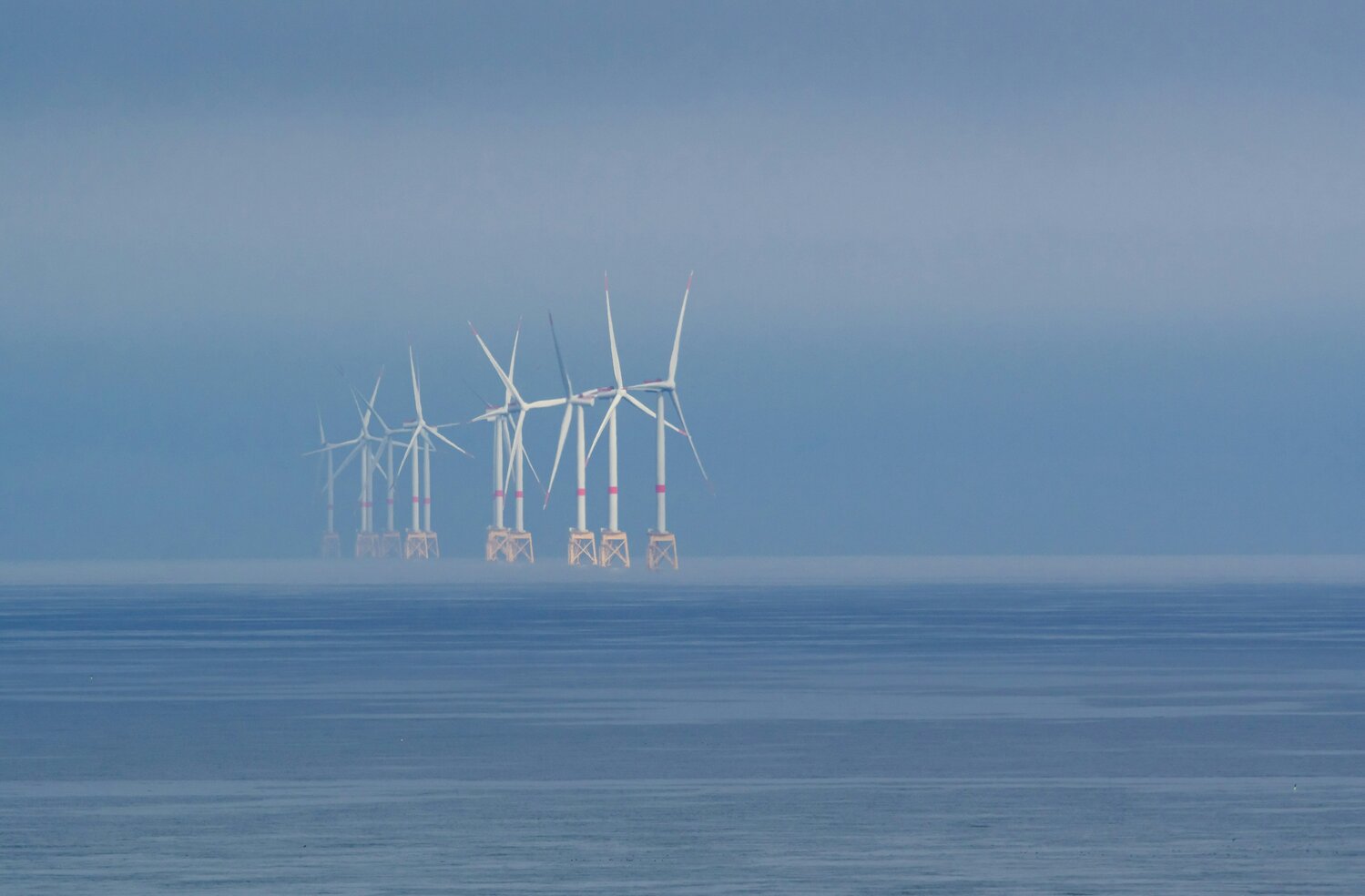
AI demand is pushing power grids and land supply to the limit. Floating wind platforms with built-in data centers could shift compute closer to its energy source.

As renewables expand, transformers face new operational stresses. Recent short-circuit testing highlights why durability is becoming a critical grid issue.

A new DOE-sponsored report from 70 researchers identifies fusion diagnostics as a critical gap in the U.S. path to commercial fusion power.

Texas A&M is evaluating a very-high temperature research reactor in College Station. The project could anchor advanced nuclear R&D and industrial decarbonization.

Researchers have developed a process that dissolves waste PET plastic and converts it into clean hydrogen gas and a commercially valuable agricultural chemical.

Washington advances legislation requiring 80% clean power by 2031 and 100% by 2046 for large data centers, with new utility tariff and compliance requirements.

As low-rate debt rolls over, lenders are factoring transition exposure into credit terms. CFOs entering 2026 refinancing cycles should reassess risk.

USGBC-led coalition launches a national HVAC pilot program to help 12–15 school districts improve indoor air quality and modernize aging systems.

As the July 2026 ITC deadline approaches, documentation scrutiny is increasing. Here’s what solar developers should reassess — plus access to the full on-demand briefing.

Heading into Q2, executive teams should stress-test capital plans against tightening energy availability, infrastructure bottlenecks, selective financing conditions, and rising underwriting costs.

Energy repricing, selective capital flows, regulatory expansion, and infrastructure constraints are converging. What executive teams must reassess before Q2 budgets solidify.

Rice is reshaping how engineers think about materials. Its speed-sensitive behavior enables adaptive structures without sensors or software.

Imerys completes its SustainAgility 2025 program, exceeds emissions targets tied to financing, and launches a new 2030 sustainability roadmap.

Boards are no longer debating sustainability values. They’re scrutinizing energy and environmental exposure as financial variables.

Energy constraints, environmental liability, and regulatory divergence are turning executive misalignment into measurable balance sheet risk.

Interior reopens 2.1 million acres in Alaska’s Dalton corridor, advancing state land entitlement and expanding energy development access.

The executive discipline lies in identifying where rigidity would force a compromised decision under stress.

Grid constraints, regulatory uncertainty, and return visibility reshaping sustainability and infrastructure investment decisions.

FlexGen updates HybridOS as storage takes a larger grid role. The release sharpens control, uptime, and revenue capture for complex assets.

Corporate resilience investment is increasing across climate, cyber, and infrastructure domains, but disconnected planning limits the effectiveness of risk mitigation in 2026.