
Getting a new energy project connected to the grid in Virginia is not a fast process. Dominion Energy's service territory, which spans Northern Virginia and its extraordinary concentration of data center load, has become one of the most congested interconnection markets in the United States. Utilities in the region have implemented formal large-load waitlists. New projects entering the interconnection queue face timelines that LBNL data put at more than 40 months at the median nationally in 2024, and Northern Virginia runs toward the longer end of that range.
Senate Bill 508 was signed on April 22 by Virginia Governor Abigail Spanberger. The law takes a different approach to capacity creation: rather than adding new interconnection points, it asks utilities to find the capacity they already have but are not fully using.
What Surplus Interconnection Service Means and Why It Matters in Virginia's Grid Market
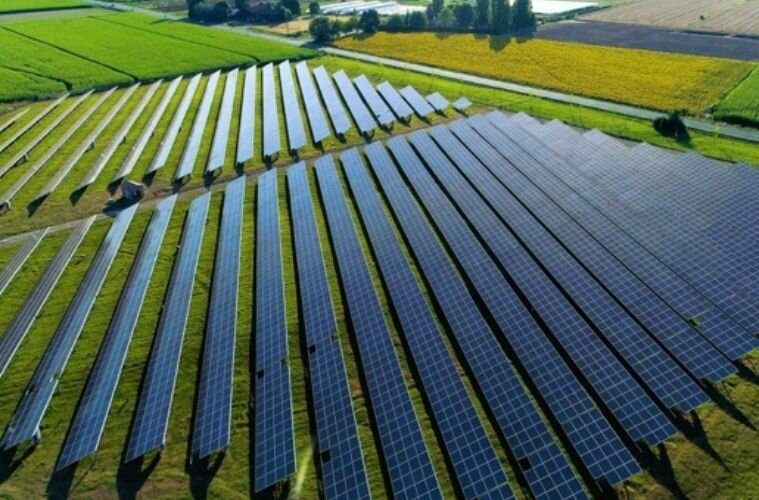
Solar farms are typically interconnected at a capacity rating that reflects their theoretical peak output. In practice, solar generation is intermittent — output varies with time of day, season, and weather. The result is that the interconnection infrastructure at a solar site often has unused headroom at any given moment. Surplus interconnection service, as defined in SB508, is that unused portion of capacity at an existing point of interconnection, available in a way that does not increase the total interconnection capacity at that point. In other words, it is capacity that has already been permitted and built, currently sitting idle.
The practical value is that a storage resource or additional solar project accessing this surplus capacity does not need to secure its own interconnection agreement and does not need to join the queue. It piggybacks on infrastructure that already exists. In a market where queue timelines exceed three years, that distinction is meaningful for developers, for corporate buyers seeking to procure renewable energy in the region, and for utilities trying to serve load growth without waiting on new transmission infrastructure.
What SB508 Requires Dominion Energy and Appalachian Power to Do by 2027
The law directs Appalachian Power (Phase I) and Dominion Energy Virginia (Phase II) to conduct comprehensive assessments of surplus interconnection capacity across their solar portfolios. Appalachian Power must identify at least two specific points of interconnection where surplus capacity is feasible. Dominion must identify at least five. Both utilities must consider factors including how much the surplus capacity could defer other generation or transmission investments, proximity to high-load areas, environmental impacts, and local permitting conditions. Assessment reports are due to the State Corporation Commission by January 1, 2027.
Alongside the assessment, both utilities must establish pilot programs: up to 100 MW for Appalachian Power and up to 500 MW for Dominion. The pilots are designed for energy storage resources and, where the SCC finds it practicable, solar generation facilities using surplus interconnection capacity. The SCC is required to approve an independent auditor to help formulate the request for proposals by March 1, 2027, with results submitted through each utility's 2027 integrated resource plan proceeding. The law explicitly does not cap total procurement at pilot program levels — utilities can go beyond those thresholds with SCC approval through standard regulatory channels.
What the Surplus Interconnection Mechanism Signals for Virginia's Energy Market
SB508 is not a solution to Virginia's grid access challenge. The volumes are modest relative to the scale of load growth the state is managing, and a pilot program with an RFP launch in early 2027 will take additional time before any projects are operational. What the law does signal is that Virginia's policymakers are looking for ways to unlock capacity within existing infrastructure rather than relying entirely on new grid construction to meet demand. That approach, pursued in parallel with traditional transmission investment, reflects a practical acknowledgment that conventional infrastructure timelines are not keeping pace with how fast load is growing in the state's most congested markets.
For energy procurement teams and developers tracking renewable energy options in Virginia, the surplus interconnection RFP process will be worth monitoring. It represents one of the few near-term pathways to grid connection in a market where standard interconnection timelines have become a genuine constraint on project development.


