
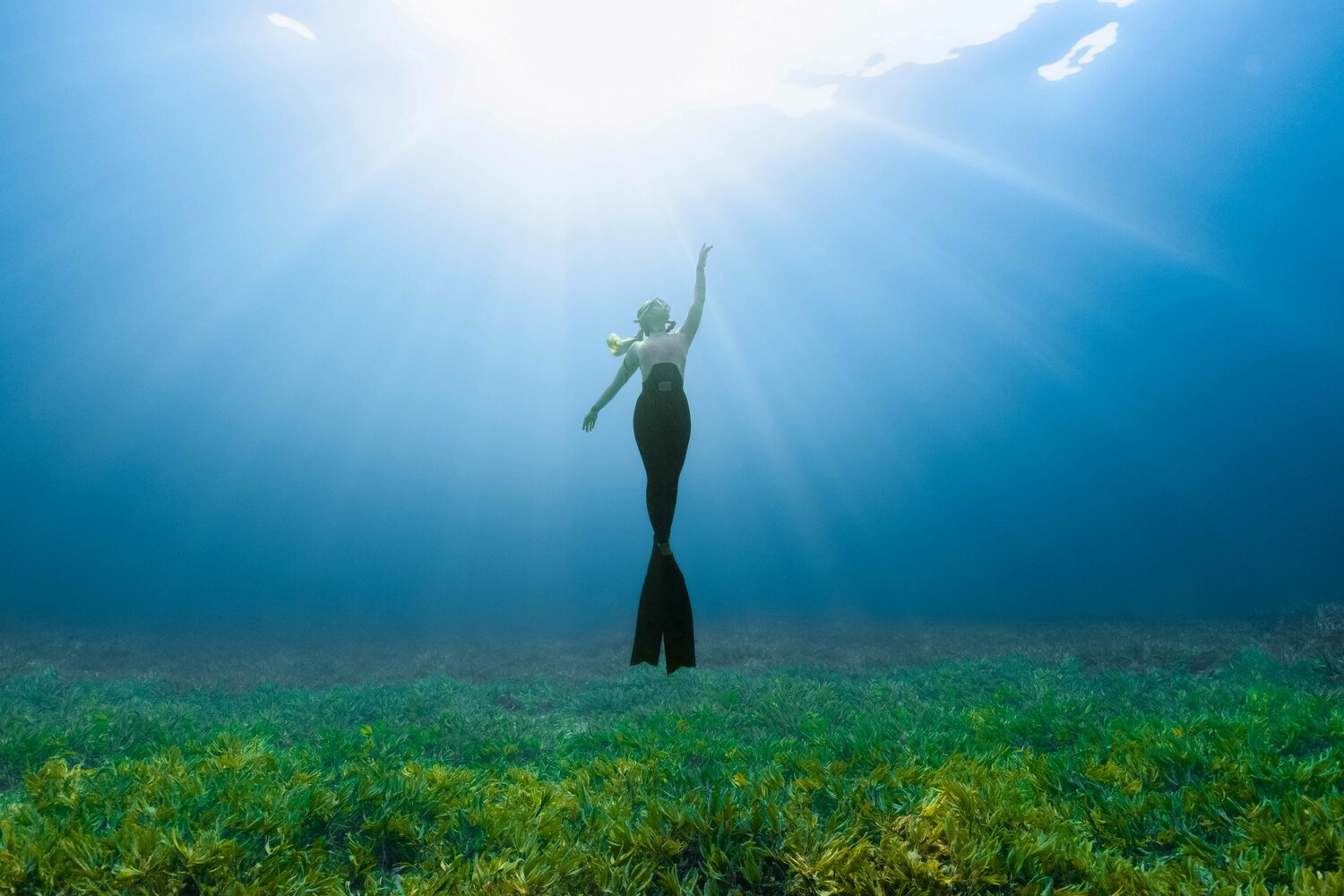
Seagrass may not be the most exotic form of life that springs to mind when imagining the vibrant marine life found in oceans around the world, but its importance to global ecosystems should not be underestimated.
There are around 72 varieties of seagrass and each provides a range of ecological benefits. The plants act as natural bioengineers, transforming their surroundings and creating complex habitats that support a diverse array of marine life in what would otherwise be limited ecosystems. Wherever seagrass beds are established, marine life flourishes.
The positive effects of seagrasses can be seen in the Red Sea, with seagrass meadows serving as nurseries and shelter for a wide range of fish and invertebrates. These meadows play a crucial role in sustaining populations of endangered species, including the green turtle and the world’s only vegetarian marine mammal—the dugong—which relies on the plant as its primary source of food. Like seagrass beds worldwide, those in the Red Sea improve water clarity by trapping suspended sediments. They stabilize the sea floor with their extensive root systems and serve as significant carbon sinks, playing a key role in the region’s carbon balance.
Seagrass is an entirely different form of life than seaweed, which is much more prevalent and numbers more than 5,000 species. Seagrasses are aquatic plants whose roots absorb water and nutrients just like the roots of land plants. Seaweed, on the other hand, isn’t a plant at all—it’s algae. While it has structures that look like roots, these don't absorb nutrients but simply grip the seabed or surfaces such as rocks.
Seagrasses range in size from small- to large-leaved varieties, each with different characteristics that offer unique benefits to their ecosystems. The small-leaved varieties have abundant flowers and small, thin leaves. They are often short-lived and have a fast turnover. The large-leaved species have thicker, more substantial leaves, live longer, have a slower turnover, and are patchy flowerers. But all varieties create and nurture various forms of life wherever they are found.
Despite their critical role in marine ecosystems, seagrass beds in the Red Sea remain relatively understudied. To address this, the NEOM Nature Reserve has launched a long-term monitoring program as one of the priorities of its marine strategy, which ensures the protection and conservation of NEOM’s Red Sea waters. The initiative aims to deepen our understanding of ecosystem health, seasonal dynamics, natural variability and potential human impacts. The findings will be instrumental in shaping conservation strategies and future restoration efforts, ensuring that seagrass continues to support biodiversity and provide essential ecosystem services throughout the NEOM region. Five species of seagrass have been identified across NEOM’s diverse marine reserve with distinct habitats characterized by unique environmental conditions and species populations.
One key finding from the survey was strong connectivity between coral reef and seagrass habitats for fish, with certain species relying on both environments at different life stages. This highlights the need to consider habitat connectivity when developing conservation, management, and restoration strategies. The monitoring program has also shown that some seagrass species expand and contract with the seasons, while others remain relatively stable but shed leaves. This leaf litter contributes valuable nutrients to the surrounding ecosystem.
During the study periods, green turtles were frequently observed and there was clear evidence that dugongs regularly feed on the NEOM Nature Reserve’s seagrass meadows. Twelve months of data collection—from January 2024 to January 2025—have now been completed, including approximately 400 hours of drone survey time.
The array of seagrass beds across NEOM’s marine sites form the basis of a vibrant seabed environment that sustains the Red Sea’s array of life—from the ocean floor to just beneath the surface. These plants are too often overlooked and should be recognized as the unsung heroes they truly are. Looking to the future, NEOM will build on its seagrass survey program to expand our knowledge and inform our science-based conservation efforts. By caring for our seagrass beds, we care for our whole marine ecosystem.
For more than 25 years, Dr. Paul Marshall has worked with leading conservation organizations, advising governments and international agencies on biodiversity, conservation planning, applied research and protected area management. These include the Great Barrier Reef Marine Park Authority and UNESCO.


