
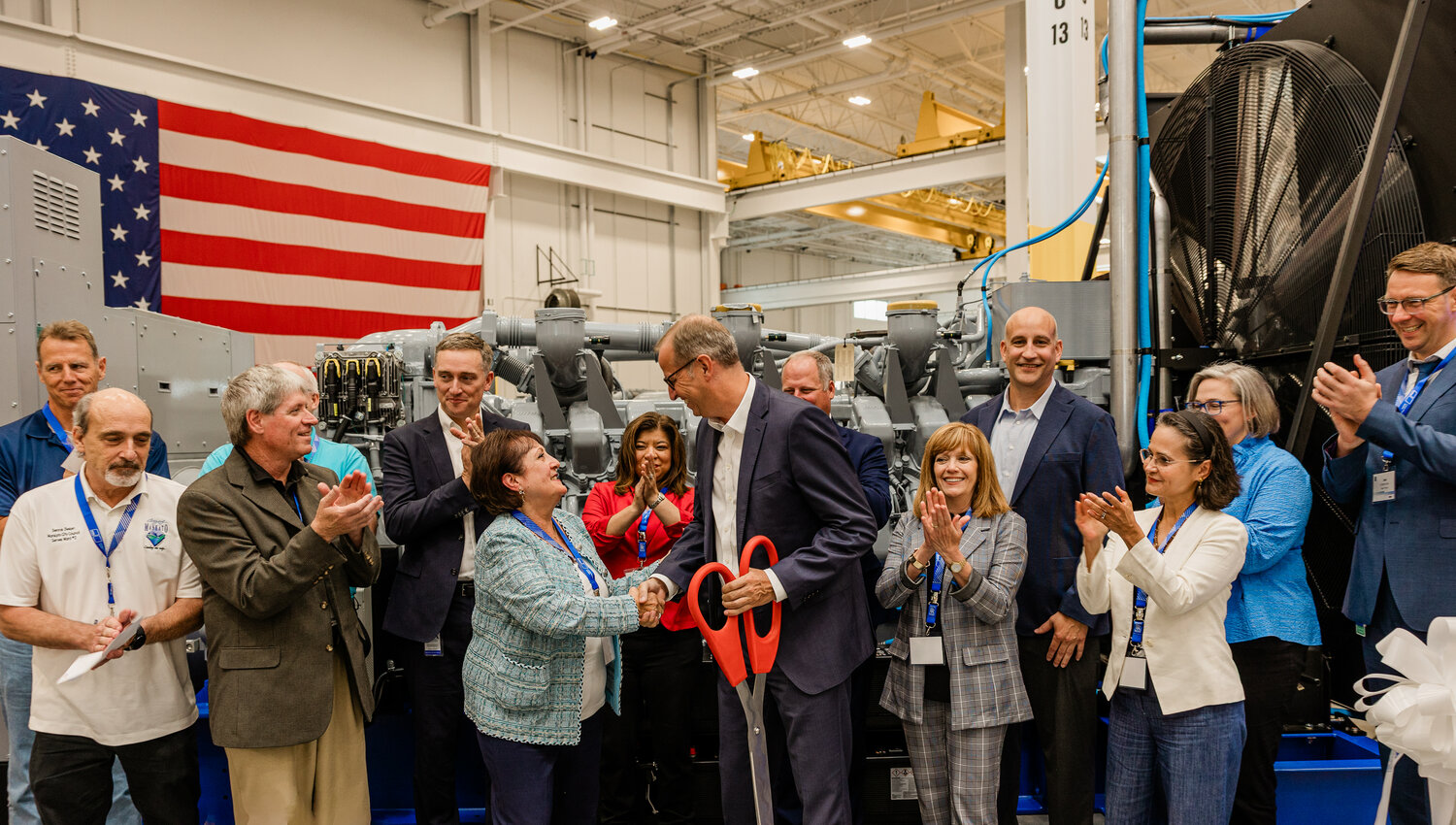
Around two-thirds of the new building is allocated to logistics operations. The remaining space will support assembly and other production work.
The facility includes climate-controlled logistics and assembly areas, indoor loading and unloading zones and space that can accommodate further expansion. Moving more logistics activity into the new center will also free up production space at the neighboring plant.
The Mankato operation assembles generator sets using mtu Series 4000 engines manufactured at Rolls-Royce’s facility in Aiken, South Carolina. The company announced a separate $75 million investment in the Aiken site in July 2025.
Together, the two investments connect engine production in South Carolina with generator assembly in Minnesota. This gives Rolls-Royce additional domestic capacity at a time when customers are paying closer attention to equipment availability, lead times and supply chain resilience.
The expansion is intended to support several markets, including healthcare, transportation, industrial operations and data centers. These facilities depend on backup generation to keep essential systems running when utility power is interrupted.
For data centers, the stakes are particularly high. Even brief outages can affect cloud services, digital transactions and access to online platforms. As more businesses rely on always-on digital infrastructure, backup power is moving from a behind-the-scenes asset to a core operational requirement.
Rolls-Royce says its backup power systems currently serve more than 25 percent of U.S. data centers. The Mankato expansion positions the company to respond to further growth in that market while continuing to supply hospitals, airports, manufacturing sites and other operations where downtime can carry significant costs.
Data center development is increasing demand for high-capacity generators that can start quickly and operate reliably during an outage. Buyers are also evaluating how equipment is sourced, how quickly it can be delivered and whether suppliers have enough manufacturing capacity to support future projects.
The investment in Mankato forms part of a broader expansion of Rolls-Royce’s U.S. industrial operations. The company reports investing more than $1.5 billion in the country over the past decade. It currently employs more than 5,000 people across 34 locations in 26 states and works with over 1,000 U.S. suppliers.
Rolls-Royce estimates that its domestic operations contribute more than $6.2 billion to U.S. gross domestic product each year. Those figures cover a wider business portfolio, but the Mankato project shows where a growing share of current investment is heading: equipment that supports power continuity for digital and physical infrastructure.
The longer-term impact of the expansion will depend partly on whether data center construction and demand for large backup systems maintain their current pace. In the near term, the facility gives Rolls-Royce more space to increase generator output, reorganize logistics and keep a larger portion of its critical power supply chain within the United States.


