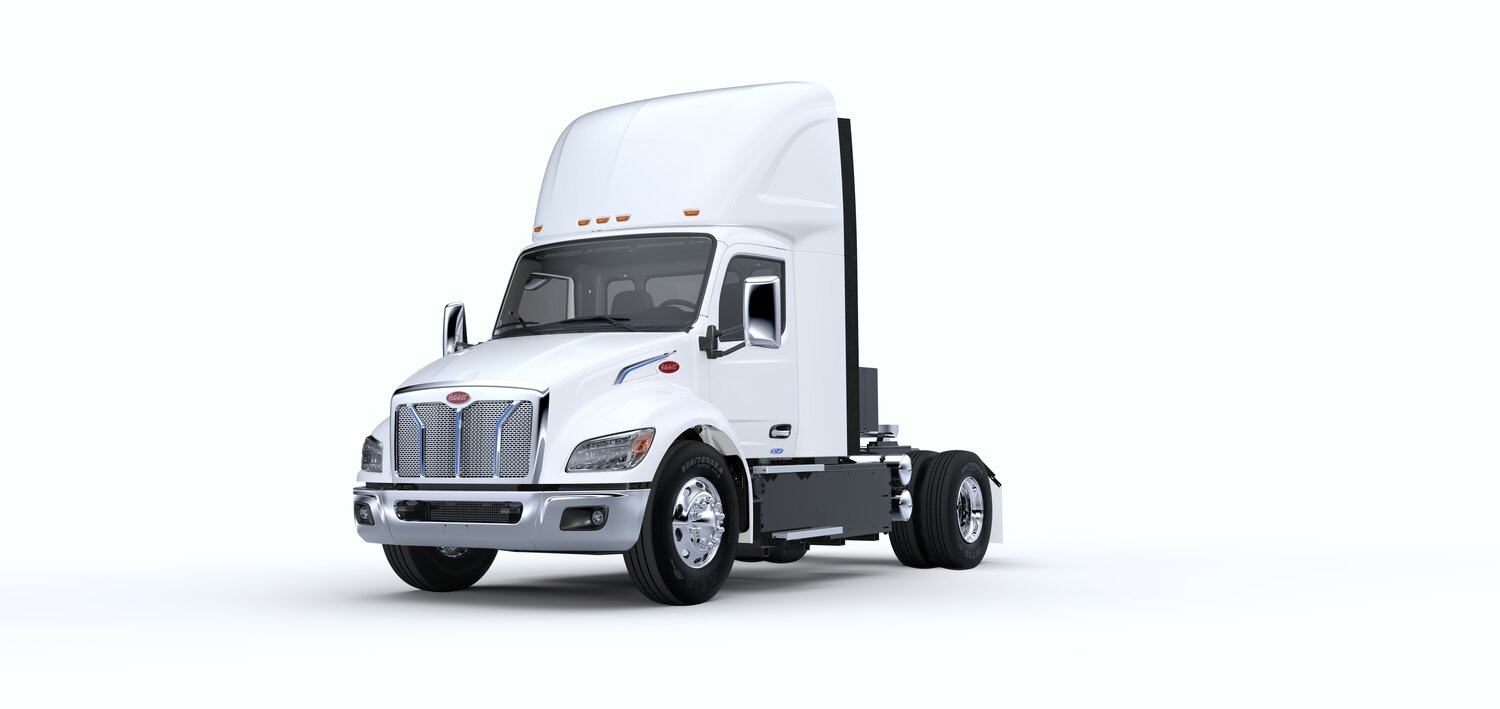
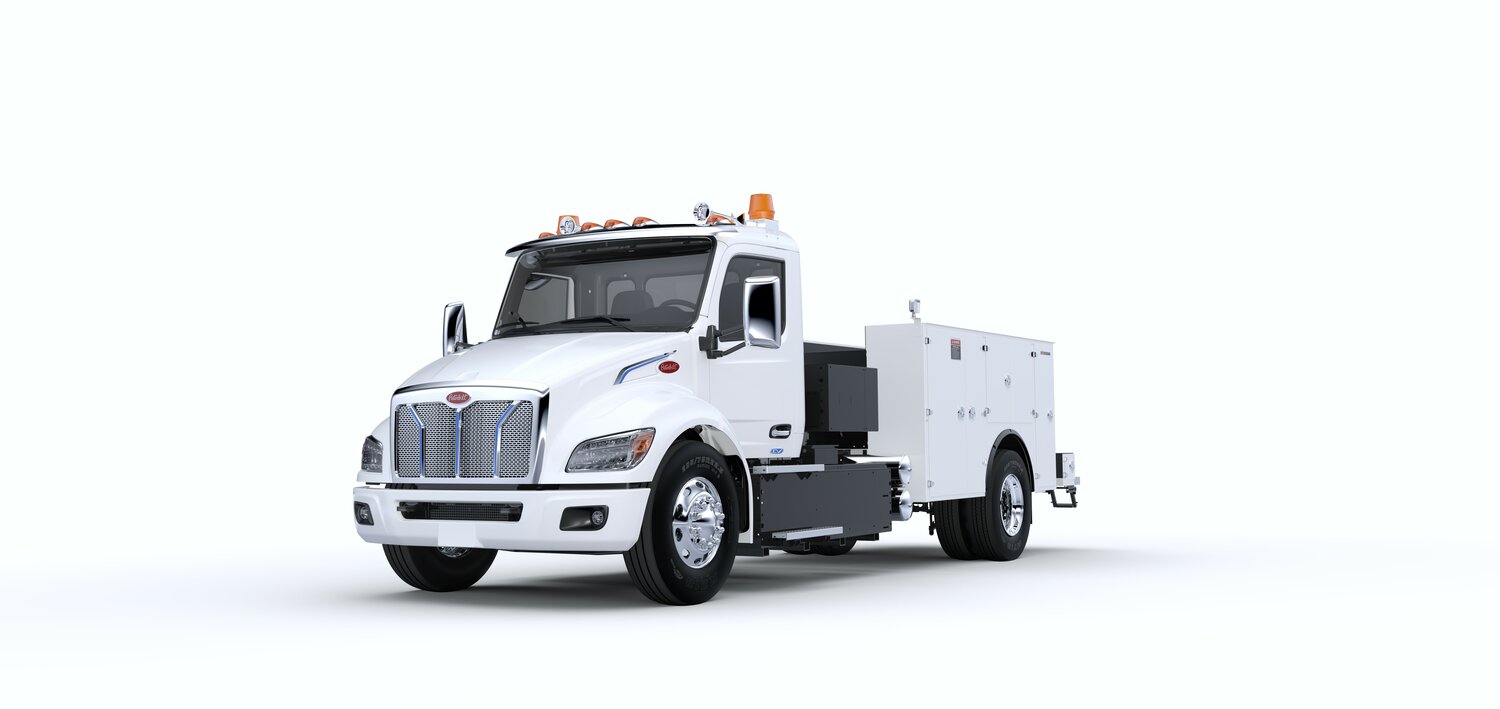
Rather than a retrofit, each truck has been purpose-built with electric architecture at the core. The Class 6 and 7 536EV and 537EV models are positioned for regional and return-to-base operations, while the heavier Class 8 548EV supports vocational uses such as dump and municipal applications requiring PTO functionality. Across all models, buyers will find chassis flexibility to meet a variety of upfitting needs, including customizable frame layouts and PTO switch configurations.
Key specs include two available battery capacities offering up to 280 miles of range. A 350kW DC fast charge setup delivers 80% charge in just over 80 minutes—suitable for multi-shift schedules. Regenerative braking options, a 15-inch EV display for key performance insights, and LFP battery chemistry optimized for cycle life and thermal safety round out the operational features.
Styling updates include blue-accented grilles and trim, EV-specific hood panels, and magneto-gray interiors. Meanwhile, standard safety systems include pedestrian detection, adaptive cruise, and rollaway protection through electronically activated parking brakes.
All three EV models are powered by Peterbilt’s PACCAR ePowertrain, which pairs a mid-mounted eMotor with dual motors and a three-speed integrated transmission. This setup enables up to 605 horsepower and 1,850 lb.-ft. of torque, supporting configurations from 4x2 to 6x4 and gross combined weights as high as 82,000 pounds.
The LFP battery chemistry offers safety advantages and lifecycle durability, while the regenerative braking system gives operators the ability to adapt energy recovery based on driving conditions.
To address charging infrastructure needs, Peterbilt is offering AC and DC charging options through its dealership network, with planning and installation services provided via partnerships with Schneider Electric, PACCAR Parts, and QMerit. These services include utility coordination, site assessments, and layout design—key components for fleets preparing to scale EV deployment.
Rather than positioning the trucks as standalone products, Peterbilt is framing the launch as part of a larger transition strategy, aiming to reduce friction for fleets shifting to electric platforms. From vehicle design to charging infrastructure and telematics integration, the new models are built to streamline that process.