
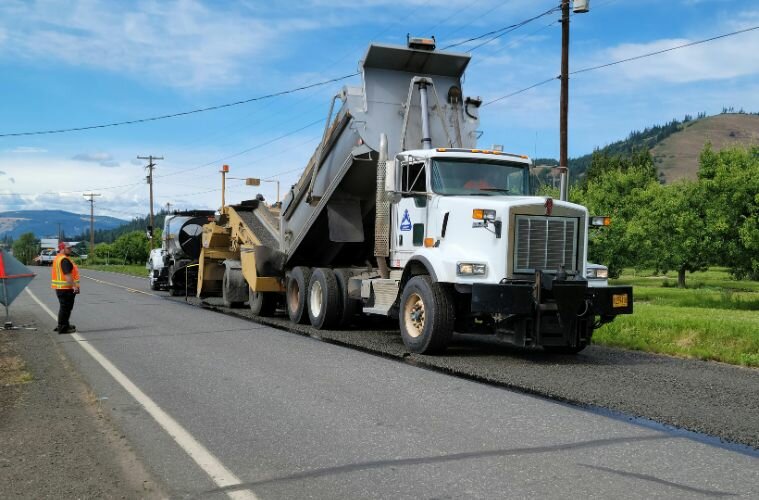
In her letter announcing the bill’s signing, Governor Kotek said the measure will cost the average Oregon driver about $66 more per year, or roughly $5.50 per month, through higher registration fees and fuel taxes. The increased revenue fills a $300 million budget shortfall and safeguards 500 ODOT positions critical to road maintenance, snow removal, and emergency response. According to the Governor, the bill ensures that Oregon’s transportation system remains safe and reliable through the winter months, when highway crews are most needed to keep roads open.
A central feature of House Bill 3991 is its introduction of a per-mile road usage charge for efficient vehicles that currently pay little or no gas tax. Beginning July 1, 2027, owners of electric, plug-in hybrid, and high-efficiency gasoline vehicles will pay a fee based on miles driven rather than gallons of fuel consumed. The rate is set at 5% of the prevailing per-gallon gasoline tax, allowing the program to adjust automatically as gas taxes evolve. As an alternative, drivers may opt to pay a flat annual fee of $340. This structure makes Oregon the first state in the continental United States to implement a mandatory per-mile system, addressing the growing funding imbalance as more drivers transition to zero-emission vehicles.
The new law also repeals Oregon’s mandatory toll program, eliminating the requirement that ODOT pursue tolling projects under the 2017 transportation law. That repeal reflects widespread opposition to tolling from local governments and communities along the I-5 and I-205 corridors. Instead, the state will focus on transparent, predictable revenue models that link road use directly to maintenance needs.
In addition to reshaping vehicle funding, the legislation simplifies Oregon’s complex truck and diesel taxation system. The state’s weight-mile tax structure—previously composed of 85 different rate categories—will now consolidate into just ten, reducing administrative burdens and curbing tax evasion. Diesel fuel will also be taxed at the same rate as gasoline, creating greater equity among vehicle classes and correcting an imbalance that has, for years, placed a heavier burden on truckers than on passenger vehicles.
To strengthen transparency and accountability, House Bill 3991 directs the Audits Division and the Legislative Policy and Research Office to review ODOT’s performance and operations. It also reestablishes a Continuous Improvement Advisory Committee (CIAC), which will meet monthly to monitor progress on major projects and report quarterly to both the Oregon Transportation Commission and the Joint Committee on Transportation. These reviews are intended to ensure that projects—especially those exceeding $250 million, are delivered efficiently and without cost overruns.
The law also tightens control over project scope changes initiated by local governments. Any local request that increases a project’s cost or complexity must now receive approval from the Transportation Commission and undergo legislative review, preventing scope expansions that exceed available funding. Together, these measures reflect a broader push by Oregon lawmakers to modernize transportation governance and enhance fiscal discipline across state agencies.
Beyond immediate funding stability, the bill represents a strategic adjustment to a decarbonizing transportation landscape. With Oregon’s push for more electric and hybrid cars, income from gas taxes—which have traditionally supported infrastructure—has steadily dropped. The new per-mile charge model offers a fair, usage-based system that maintains critical infrastructure investment while recognizing the state’s climate goals. Governor Kotek described the approach as one that “ensures all vehicles pay their fair share for the roads they use,” highlighting its role in preserving transportation equity during Oregon’s energy transition.
Implementation will roll out in stages. Oversight and audit provisions take effect January 1, 2026, while per-mile road charges will begin July 1, 2027, expanding through 2031 to include additional vehicle categories. The repeal of the toll program, however, is immediate. By acting now, Oregon aims to prevent future service disruptions and maintain momentum in modernizing its infrastructure funding model.
House Bill 3991 marks one of the most significant updates to Oregon’s transportation policy in over a decade. It balances short-term operational needs with long-term sustainability, aligning fiscal responsibility with the realities of a rapidly electrifying vehicle market.


