
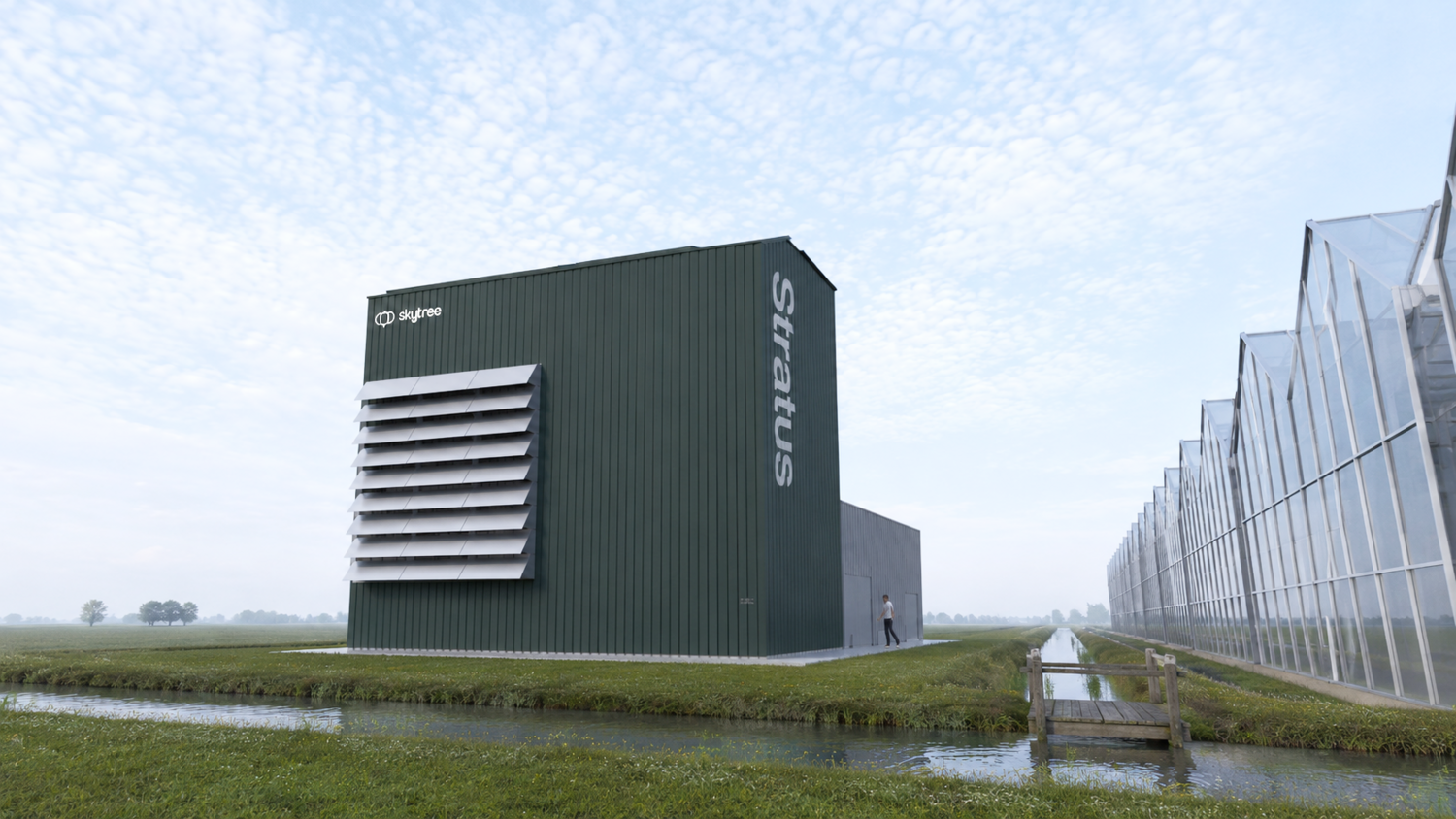
Skytree is positioning Stratus for customers that rely on CO₂ but face rising liquid CO₂ prices, supply disruption or pressure to reduce fossil-linked inputs. The company says the platform is supported by more than two years of operational lab data and is now moving into commercial use.
The Netherlands project is also a milestone for Skytree’s own development. It signals a move from research, testing and field validation toward manufacturing industrial direct air capture systems for real-world customers.
Direct air capture still faces familiar questions. Energy demand, cost and scalability remain key issues for any company trying to use atmospheric CO₂ commercially. Skytree says its Stratus system uses moving-bed technology that separates adsorption and desorption. In simple terms, the material that captures CO₂ moves between cold and hot chambers, rather than heating the entire machine during the release process.
According to Skytree, the system can use low-grade heat of at least 80°C for most of its heating load. Depending on configuration, electricity consumption can fall to around 0.9 to 1.0 MWh per metric ton of CO₂ captured. The company links this performance to an approach that heats the capture material itself rather than the full surrounding system.
Stratus is modular, with individual unit capacity starting at 2.5 metric tons of CO₂ per day. The format is designed to support scaling into larger direct air capture parks, while making maintenance and future upgrades more manageable. Skytree also uses process-control software to monitor ambient conditions and help maintain steadier CO₂ output through seasonal temperature changes.
The first commercial use case is greenhouse production, but the potential market is wider. Other sectors that need reliable CO₂ include e-fuels, food and beverage, packaging and industrial users looking for more localised carbon supply.
For growers, the real value will not come from the technology label. It will come from whether the system can deliver dependable CO₂ at a workable cost, with lower exposure to fossil-linked supply chains. If the Lingezegen Energy project performs as planned, it could give the horticulture sector an early commercial model for decentralised, fossil-free CO₂ supply.


