

“We are entering the golden era of renewable energy,” said Rashid bin Saeed, Founder and CEO of AquaVolt Solutions, in an August 2025 press release. “Our $600 million target is ambitious—but the world’s momentum toward clean, decentralized, and land-efficient energy systems is undeniable. Floating solar is no longer a niche—it’s becoming central to future energy strategies.”
As of August 2025, AVS has secured more than $100 million in floating solar contracts across Southeast Asia, Africa, and the Middle East. These projects span large-scale reservoirs, coastal sites, and hybrid infrastructure aligned with national energy strategies. Collectively, AVS has delivered or committed to over 2,200 MW of floating solar capacity.
The company’s growth strategy coincides with a global surge in clean energy investment, which the International Energy Agency (IEA) forecasts will surpass $2 trillion annually by 2030. Floating solar is especially attractive in emerging markets where land constraints, water infrastructure, and rising power demand intersect.
To achieve its 2027 milestone, AVS is prioritizing three areas:
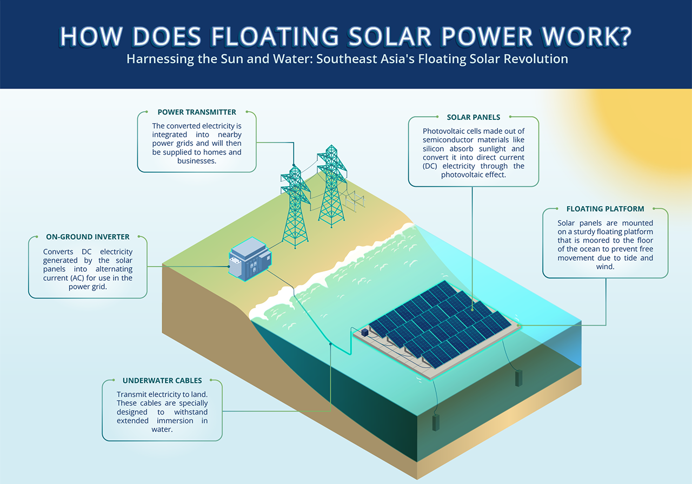
Floating solar has gained endorsements from the World Bank, Asian Development Bank, and IRENA, which emphasize its role in balancing land scarcity with clean energy needs. Benefits include:
Looking beyond 2027, AVS plans to:
“We’re not chasing growth for its own sake,” Rashid added. “We’re building clean power infrastructure that delivers measurable environmental and economic benefits for the communities we serve.”


