
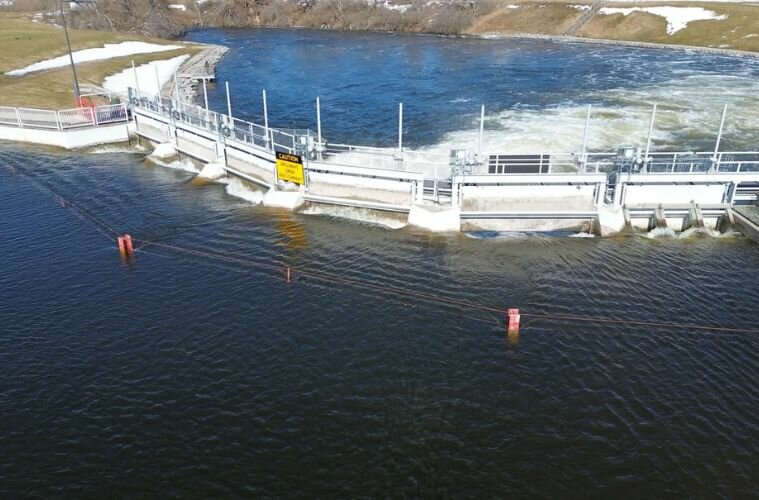
The investigation found that dozens of Michigan's highest-risk dams remain in poor or unsatisfactory condition years after regulators first flagged the deficiencies, and that federal disclosure rules keep many of the underlying safety records hidden from the public. Michigan has 2,600 dams, and the average structure is now three decades past the 50-year design life commonly used for aging dam infrastructure. Roughly three-quarters are privately owned, and many generate little or no revenue to fund the multimillion-dollar rehabilitation projects their conditions require.
The Numbers Point to a National Pattern
Of 153 high-hazard dams tracked in Michigan's state and federal databases, 19 are rated poor or unsatisfactory, along with 23 of 155 significant-hazard dams; another 231 dams would likely fail to meet national safety standards if the state adopted them. Nationally, the U.S. Army Corps of Engineers' National Inventory of Dams lists more than 90,000 dams, and the American Society of Civil Engineers' 2025 infrastructure report card counts more than 16,800 as high-hazard potential, with roughly 15%, or more than 2,500, rated poor or unsatisfactory. The Association of State Dam Safety Officials' most recent estimate puts the cost of rehabilitating the nation's non-federal dams at $165.2 billion, including $37.4 billion for non-federal high-hazard dams specifically.
Deferred Maintenance Is Becoming a Financial Liability, Not Just a Safety One
Michigan's 2020 Edenville and Sanford dam failures forced more than 10,000 evacuations and caused more than $200 million in property damage, and this spring's flooding produced new near-misses at the Bellaire, Cheboygan, and LaBarge dams that have already cost the state at least $5 million in emergency response. Ownership uncertainty compounds the financial exposure. A state judge recently recommended denying Consumers Energy's proposed sale of 13 aging dams to a private equity firm, citing insufficient assurance the buyer would maintain them, while the owner of the century-old, high-hazard AuTrain Dam declared bankruptcy, shifting responsibility for the structure to the state after federal regulators terminated its operating license. Deferred infrastructure maintenance tends to surface as a financial event long after the underlying condition was first identified, a pattern already playing out in water utility rate cases around the country.
For companies with facilities, industrial campuses, or capital projects located downstream of aging dams, questions that used to receive limited attention, such as who owns the structure, whether repairs are funded or only planned, and how an emergency drawdown could affect operations, are increasingly feeding into insurance underwriting and site-level risk assessments. Insurers have already tightened underwriting and withdrawn coverage in other regions facing rising climate-driven infrastructure failures. Facilities teams are often the last to notice how narrowly a standard policy responds once a known condition goes unaddressed. Dam condition is becoming another resilience variable to verify directly, alongside transmission availability and water supply, rather than a downstream utility problem to assume someone else is managing.


