

The market is rewarding assets that have already cleared permitting, interconnection, and financing. Everything else is waiting longer and competing harder for what remains.
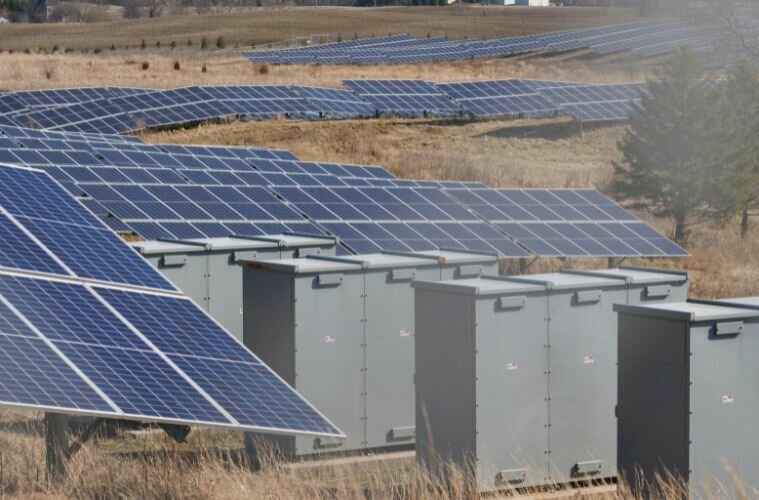
States that voted for President Trump in 2024 accounted for 74% of all solar capacity installed during the quarter, with TX, FL, OH, IN, MI, AZ, and MS ranking among the top ten states for new additions

Tariffs, permitting, financing, and policy uncertainty are each stalling projects in 2026. They look the same from a distance. The right response to each one is completely different.

Zurich Resilience Solutions analysis of 1,380 Southeast Asia renewable energy sites finds 75% of planned capacity at critical climate risk by 2030 and $165 billion in value at stake.

A Verdantix survey of 350 energy leaders found energy price volatility is now the top obstacle. Companies treating resilience as backup power are carrying growing competitive exposure.
E2 tracked nearly 8 GW of canceled clean energy capacity and $13 billion in abandoned investment in Q1 2026 alone. The hidden cost is what those projects were supposed to deliver.

Global energy transition investment hit $2.3 trillion in 2025. But capital is concentrating in data centers and a few large managers, leaving most clean energy deals competing for less.
Rare Element Resources reports Bear Lodge is tracking toward March 2028 federal permitting completion under FAST-41, with its Wyoming separation demonstration plant targeting late summer 2026.

Eighteen EU member states signed a cross-border autonomous vehicle testbed agreement in Luxembourg on June 8, with $21.8 million in digital infrastructure funding launching this month.

Federal permitting blocked 11 GW of clean energy in one year. The interconnection queue holds 2,060 GW more. Operations teams with project-tied energy timelines carry direct exposure.

Clean energy project finance credit standards shifted in 2025 and 2026. Companies with infrastructure commitments built on older assumptions are running into those changes now.

DOE selected Duke Energy for up to $96 million in federal funding for reliability upgrades at coal-fired power plants in Kentucky and North Carolina across three sites.

Permitting delays are stranding pre-development capital and driving carry costs higher. CFOs evaluating energy and infrastructure projects need to treat permitting uncertainty as a front-end financial risk.

Steel, copper, and grid material costs have reset project economics across clean energy and infrastructure. Finance teams holding 2022-era models need to close the gap before H2 capital decisions land.

Canovation and CANPACK are preparing CanReseal for pilot-line use. The project tests whether resealable aluminum cans can fit existing production.

Wisconsin settled its PFAS enforcement case against Tyco Fire Products, requiring a $10M trust fund payment, replacement wells, and 20 years of groundwater monitoring in Marinette County.

South Africa has enacted one of the most ambitious sustainability disclosure frameworks on the African continent. What the framework requires and what most companies can actually produce are two different things.

Vermont's governor vetoed H.727, the Vermont Sustainable Data Centers Act, on May 28. The House failed to override the next day, leaving the state reliant on existing regulatory tools.

Singapore, Malaysia, Indonesia, and Thailand have enacted mandatory sustainability disclosure. Third-party assurance lags years behind, leaving a gap between what is filed and what can be trusted.

GHG Protocol updates would require hourly-matched renewable energy procurement. Companies built on annual RECs or cross-border certificates face a disclosure credibility problem.