

Paking Duck is expanding in Shenzhen with two new production sites. The move reflects rising demand for faster, customized packaging across global markets.

Forced labor enforcement just expanded to 60 countries. ESG disclosures are hardening into liability. Energy assumptions are dated. The window to act is narrowing.

If you watched Elon Musk take the stage last week and describe building a terawatt-scale chip manufacturing facility, you probably had one of two reactions: jaw on the floor, or quiet concern...

Cheniere Energy is seeking approval to export an additional 251 Bcf of LNG annually from its Corpus Christi facility, as DOE begins review under federal law and public comment opens.

Federal deregulation is real. It did not produce a simpler compliance environment. It produced a more fragmented one.

New Jersey is adding large-scale battery storage to ease grid strain. A 150 MW project aims to stabilize prices and support peak demand.

A Rhode Island House bill moving to committee hearing this week would remove clean coal from the state's list of preferred fuels for energy facility approvals.

Most quarterly outlooks try to cover everything at once. The result is usually the same—broad, safe, and easy to ignore. That’s not where things stand right now.

Corporate energy costs are entering a new era of sustained demand growth, grid constraints, and rising electricity prices—reshaping how companies forecast, budget, and manage long-term energy exposure.

Water stewardship has moved well past ESG optics. Buyers, lenders, and insurers are building it into contracts and risk models. Here's what that means for your business.

The gap that most ESG teams face is not a gap in commitment or intent. It is a gap in the data infrastructure required to answer questions.

Up to 63% of U.S. wetlands lost federal protection after Sackett. If your company operates in multiple states, your compliance picture just got a lot more complex.

The global water and wastewater treatment market is expanding at 7% annually. Technology — membranes, AI, IoT — is driving the growth.

From CDP Water scoring to Alliance for Water Stewardship certification, buyer expectations on supplier water data have become significantly more specific.

Discharge monitoring report inaccuracies are being treated as independent violations of the Clean Water Act — not just permit paperwork issues.

Arkansas approves funding for local water and wastewater upgrades while expanding statewide infrastructure investment and planning future bond financing.

CSRD's water standard requires watershed-level data that takes 6–9 months to collect. Is your company prepared?

A SWPPP that does not match reality is not just a documentation problem — it is evidence of a compliance management failure that regulators treat as more serious than most facilities assume.

A new solvent-based process could accelerate lithium extraction from brines. The approach may unlock lower-grade resources beyond traditional evaporation regions.
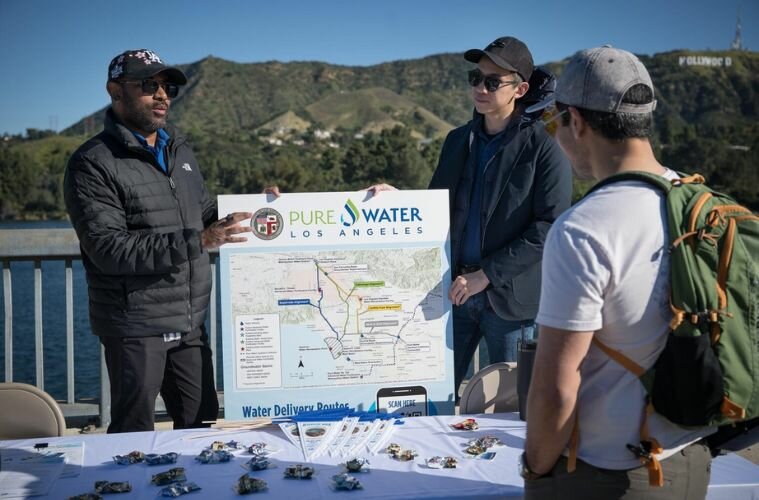
LADWP hosted a community reservoir walk honoring Women’s History Month and the 101st anniversary of Mulholland Dam while highlighting Los Angeles’ water infrastructure legacy.