

Congestion costs in PJM topped $3 billion in 2025 and may double again this year — and those costs show up directly in electricity bills. Dynamic line ratings won't solve the underlying infrastructure gap, but they can take a meaningful bite out of congestion while the grid expansion the country needs catches up. The problem is that most regulators don't yet understand how.

Federal permitting blocked 11 GW of clean energy in one year. The interconnection queue holds 2,060 GW more. Operations teams with project-tied energy timelines carry direct exposure.

Clean energy project finance credit standards shifted in 2025 and 2026. Companies with infrastructure commitments built on older assumptions are running into those changes now.

DOE selected Duke Energy for up to $96 million in federal funding for reliability upgrades at coal-fired power plants in Kentucky and North Carolina across three sites.

Permitting delays are stranding pre-development capital and driving carry costs higher. CFOs evaluating energy and infrastructure projects need to treat permitting uncertainty as a front-end financial risk.

Steel, copper, and grid material costs have reset project economics across clean energy and infrastructure. Finance teams holding 2022-era models need to close the gap before H2 capital decisions land.
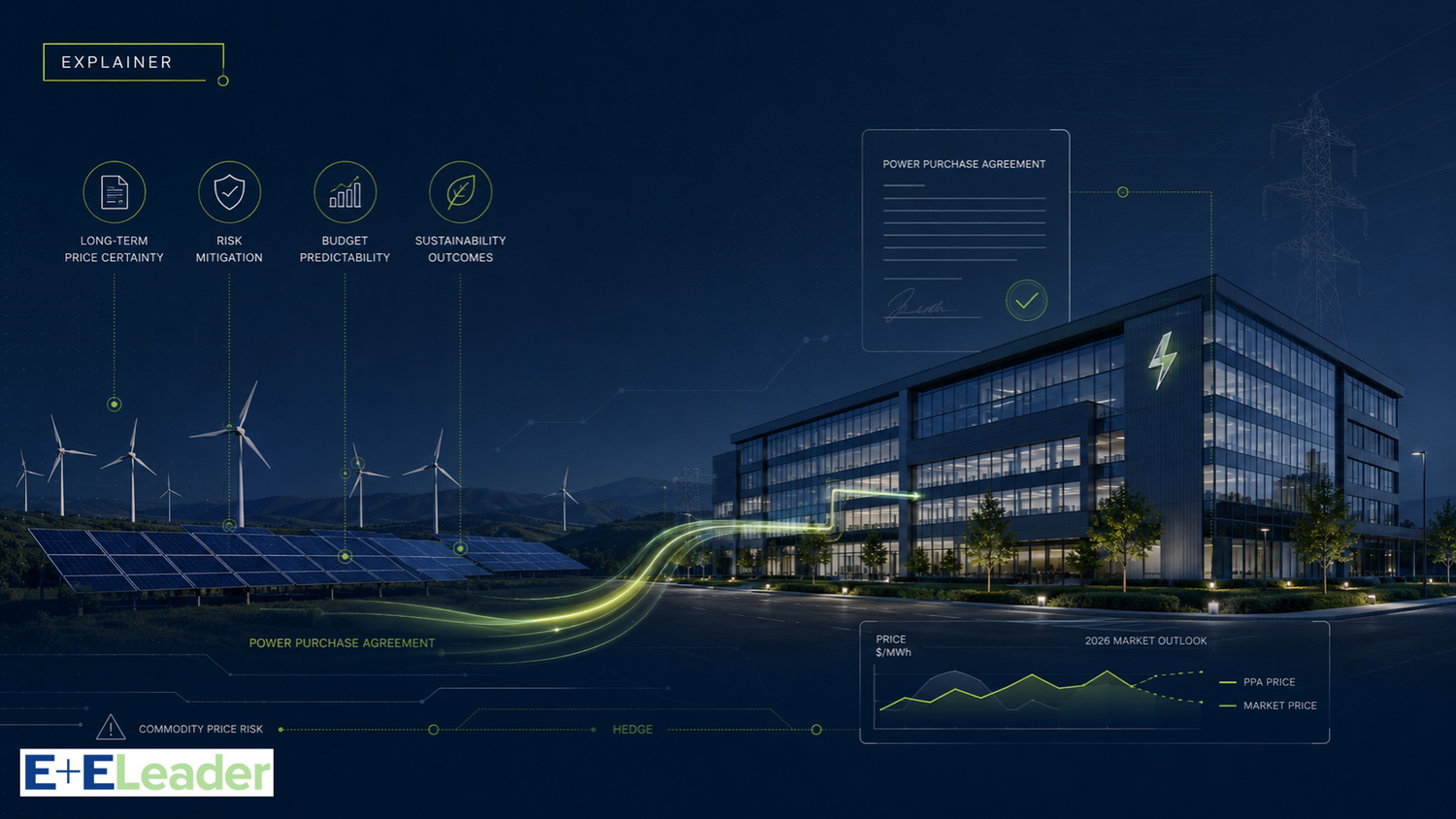
A power purchase agreement (PPA) lets companies buy renewable energy directly from a generator at a fixed price. Here's how they work, who they're right for, and what to watch out for.

South Africa has enacted one of the most ambitious sustainability disclosure frameworks on the African continent. What the framework requires and what most companies can actually produce are two different things.
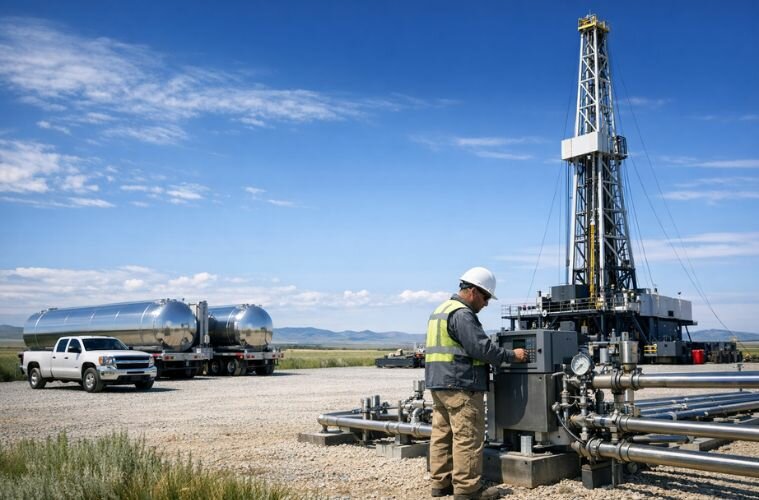
REV Exploration closes a $4M raise with Eric Sprott to advance its Aden Dome helium and natural hydrogen prospect as Middle East supply disruptions accelerate the North American sourcing race.

A UK consortium validated a floating hydrogen hub delivering 5MW of clean shore power to docked ships with no grid connection, cutting years off typical port electrification timelines.

A University of Rochester solar desalination system now extracts lithium directly from seawater, a development procurement teams tracking battery supply chain risk should follow.

DartPoints acquired a 343,000-square-foot campus in Lexington, Kentucky, with an owned substation and a path to 70 MW, targeting AI, hyperscale, and neo-cloud demand.

The fifth annual Alaska Sustainable Energy Conference closed in Anchorage on May 21 with the clearest public accounting yet of where the Alaska LNG project actually stands.
Idaho's April trade mission to Japan and Micron Technology's accelerated Boise fab timeline are positioning the state inside the semiconductor and AI supply chain buildout reshaping U.S. industrial geography.

PIMCO's 2025 Sustainable Investing Report covers $645B in sustainability strategies, 1,300-plus corporate engagements, and expanded ESG and climate frameworks across fixed income.

The California ISO Board of Governors approved 38 transmission projects totaling $6.7 billion to meet rising load demand and expand access to renewable energy basins across California by 2035.

The move toward Iceland, Norway, and northern Canada is being driven by cooling physics and long-term climate trajectory as much as by renewable energy access.
House FY2027 energy and water bill advances at $58.5B, cutting grid and clean energy programs sharply while boosting nuclear defense and water infrastructure.

Mexico's CFE declared grid emergencies three times in summer 2024 and reserve margins hit 3% in May of that year. For manufacturers who relocated to Mexico, summer reliability risk was not in the original location analysis.

El Nino drought cut hydropower output across South America in 2024-2025. For procurement and finance teams with Latin American operations, that is a seasonal power cost and curtailment risk standard contracts do not address.